What to Say to Someone With Bipolar Depression
A practical caregiver guide with supportive phrases, low-pressure texts, help for withdrawal and guilt, communication limits, and crisis guidance.

Need practical help supporting someone with bipolar disorder? This section provides crisis response tips, communication strategies, daily care advice, and guidance for caregivers and family members navigating the journey.
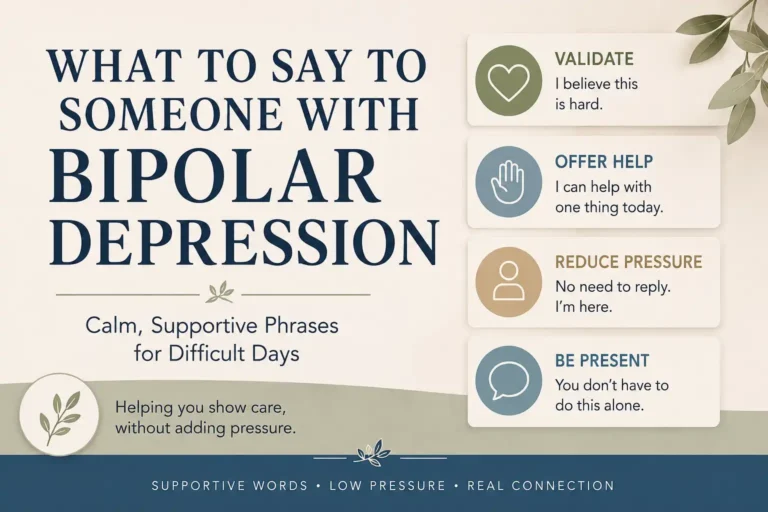
A practical caregiver guide with supportive phrases, low-pressure texts, help for withdrawal and guilt, communication limits, and crisis guidance.
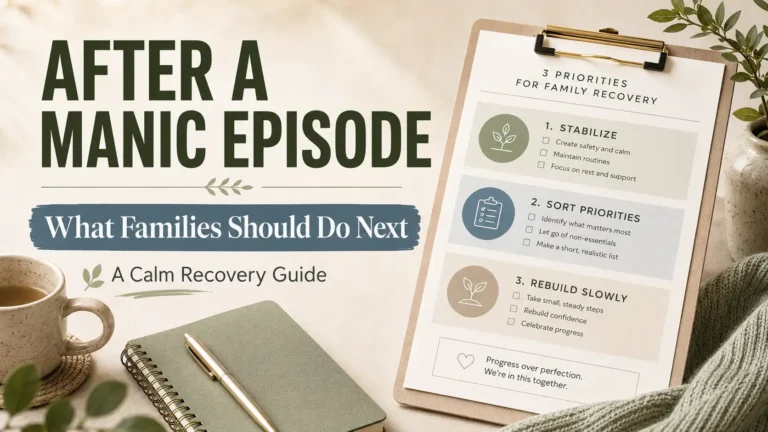
Learn what to do after a manic episode, including how families can reduce pressure, sort practical concerns, communicate carefully, and begin recovering too.

Learn how to de-escalate an argument with someone who has bipolar disorder, including what to say, when to pause, how to set healthy boundaries, and when safety should come first.

When someone with bipolar disorder refuses help, it can leave family members feeling scared, stuck, and exhausted. This guide explains calm communication, boundaries, safety planning, and caregiver support without blame or pressure.

When someone you love is manic, the wrong words can escalate everything. These 7 caregiver scripts show what to say, what to avoid, and how to protect safety during difficult conversations.

Editorial note: This article is for educational support only. It is not a substitute for medical, mental health, legal, relationship, or crisis advice. If there is immediate danger, call emergency services. If you are in the United States and you or someone you care about may be in crisis, call or text 988. Knowing what…

Elena is the name I use here to protect my family’s privacy and my own. I cannot tell every detail of my story. I will not share names, exact dates, locations, private messages, legal details, or anything that could expose my loved one or the people around him. But I can tell you this: the…

Quick answer: This site is for families who love someone with bipolar disorder and addiction. It shares lived caregiver experience, practical support, safety planning, and boundary-setting. It does not replace medical care, addiction treatment, crisis support, or emergency services. My name here is Elena. It is a pen name I use to protect my son’s…

If you’re searching this right now, things may feel urgent, confusing, and scary. Maybe the person you love has not slept, is talking very fast, is making risky choices, or seems hard to reach. As a caregiver who has lived through bipolar crises with a loved one, I wrote this guide to share the steps…

Quick answer: Children of bipolar parents need safety, honest age-appropriate explanations, predictable routines, permission to have their own feelings, and trusted adults who do not ask them to become the parent’s caregiver. A child can love a parent with bipolar disorder and still feel confused, scared, angry, protective, embarrassed, or exhausted. The goal is not…