
How to Support a Sibling With Bipolar Disorder: Boundaries, Communication, and Your Role

Learning how to support a sibling with bipolar disorder can feel very different from supporting a spouse, a child, or a parent. You may care deeply about your brother or sister while also wondering how much responsibility you are expected to take on.
You might be asked to make phone calls, lend money, calm family disagreements, help with appointments, or step in when your parents no longer can. Over time, it can become difficult to tell where being a supportive sibling ends and becoming the family’s default caregiver begins.
This guide focuses on staying connected without quietly becoming responsible for every part of your sibling’s life.
Important: This article is educational and supportive. It is not medical, legal, financial, or emergency advice. Bipolar disorder affects people differently, and family situations vary widely.
You can support a sibling with bipolar disorder by listening, making specific and realistic offers of help, respecting their role in their own decisions, and communicating your limits clearly. You can also protect time for your own work, relationships, finances, health, and family. The goal is not to withdraw support. It is to offer support you can realistically sustain without becoming the therapist, treatment manager, financial rescuer, or sole crisis contact.
Your Role as a Sibling Is Different
Adult siblings often have a relationship that is different from the relationship between a parent and child or between spouses. You may share history, family traditions, memories, and concern for each other without having day-to-day responsibility for one another.
That distinction matters. Caring about your sibling does not require taking over every difficult situation.
| You Can Offer | You Do Not Have to Become |
|---|---|
| Listening, encouragement, and emotional support | Their therapist |
| Specific practical help you can realistically sustain | Their full-time case manager |
| Clear and respectful communication | The family’s permanent messenger |
| Time together that is not centered on mental health | Their only source of connection |
| Help locating professional or community resources | The person responsible for treatment decisions |
The National Institute of Mental Health notes that friends and family can offer emotional support, understanding, patience, encouragement, listening, and appropriate practical help. It also reminds supporters to take care of themselves.
What Support Can Look Like Between Adult Siblings
Listen Before Trying to Fix
When someone you love is struggling, the instinct to solve the problem can be strong. Sometimes your sibling may need something simpler: someone willing to hear what they are saying without immediately correcting, arguing, or offering a plan.
NAMI recommends validation and reflective listening in conversations with loved ones experiencing mental health challenges. Validation does not mean agreeing with every belief, interpretation, or behavior. It means acknowledging the feelings and experience the person is describing.
If communication regularly becomes difficult, this guide on how to communicate with someone who has bipolar disorder goes into greater detail.
Make Specific Offers
“Let me know if you need anything” is generous, but it can also leave both people unsure about what the offer actually includes.
A specific offer creates clearer expectations:
- “I can bring dinner over Thursday.”
- “I have about 20 minutes to talk tonight.”
- “I can give you a ride Tuesday if that would help.”
- “I can help you look for local family or peer-support resources.”
A specific offer also makes it easier for you to decide whether the help fits your time, energy, and other responsibilities.
Keep Some of the Relationship About Ordinary Life
Your relationship does not need to revolve around bipolar disorder every time you speak.
You might watch a favorite show, cook together, talk about sports, exchange family stories, walk somewhere familiar, or discuss a shared interest. NAMI specifically encourages meaningful everyday activities as one way to maintain a positive relationship with a loved one living with mental illness.
Bipolar disorder may be an important part of what your sibling is navigating. It does not need to become the only subject connecting you.
When You Become the Family’s Default Caregiver
Some adult siblings gradually take on responsibilities they never consciously agreed to.
You might become the person your parents call whenever something happens. You may be asked to contact your sibling, explain one family member to another, arrange transportation, research services, handle repeated practical problems, or make sure everyone stays informed.
None of these situations automatically means something is wrong. The question is whether the role has become larger than you can realistically carry.
Being the most available sibling does not automatically mean you must become the person responsible for every family problem.
It can help to distinguish a specific favor from an open-ended role.
“I can call her tonight” is different from becoming the person expected to call every time there is a problem.
“I can drive him this week” is different from becoming the permanent transportation plan.
“I can help research options” is different from becoming responsible for making another adult’s decisions.
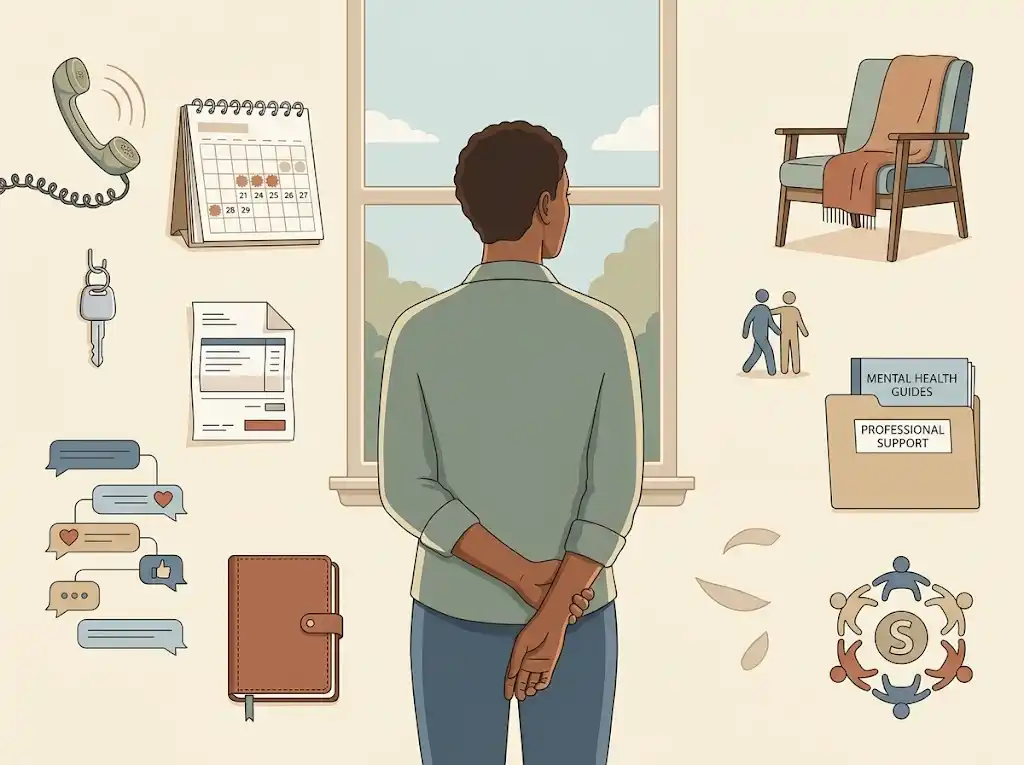
Before You Say Yes, Ask Yourself These 5 Questions
Before agreeing to a new responsibility, take a moment to define what is actually being asked of you. This is especially useful when guilt, urgency, or family pressure makes an immediate “yes” feel easier than thinking through the long-term impact.
What exactly am I being asked to do?
Can I realistically sustain this if it happens more than once?
Am I the only person being asked to help?
Is this something my sibling can decide or handle themselves?
Is there a smaller form of help I can offer instead?
This is also where the distinction between support and rescuing can become useful. See how to support someone with bipolar disorder without enabling for a deeper discussion of that question.
Setting Boundaries With a Brother or Sister
A boundary describes what you are willing or able to do. It works better when it is specific enough that both people understand what it means.
Time and Availability
You can decide when you are available for calls, visits, transportation, or practical help.
You might be available for one evening call but not repeated calls throughout the night. You might be able to visit once a week but not every day.
Clear limits are often easier to understand than becoming unavailable only after you are exhausted.
Money
Financial requests can be emotionally complicated between siblings.
You can decide that lending or giving money is not something you can sustain. You can also choose a narrower form of support that does not involve taking responsibility for another adult’s finances.
If money is involved, stay within what you can afford and avoid making commitments you do not understand or cannot maintain. Complex financial or legal arrangements should be discussed with an appropriately qualified professional.
Your Home
If your sibling visits or stays with you, you can communicate expectations about your own home, including guests, privacy, shared spaces, length of stay, and household responsibilities.
The purpose is not to punish your sibling. It is to make expectations visible before resentment builds.
Calls and Messages
You do not need to answer every call immediately to remain caring and connected.
A predictable pattern can sometimes be easier for both people:
“I may not respond while I’m working, but I will check my phone this evening.”
Disrespectful or Unsafe Behavior
A bipolar diagnosis does not automatically explain or excuse every difficult behavior.
If a conversation becomes insulting, threatening, or otherwise unsafe for you, focus on the behavior itself rather than using the diagnosis as the label.
You can end a conversation, leave a situation, or create distance when needed. For a fuller framework, see setting boundaries with someone with bipolar disorder.
What to Say: Calm Scripts for Siblings
Having a sentence prepared ahead of time can make it easier to communicate a limit without turning the conversation into a long argument.
“I can talk for about 20 minutes tonight. I want to hear what’s going on.”
“I’m not able to lend money, but I can help you look at other options if that would be useful.”
“I care about you, but I’m going to end this conversation if we keep speaking to each other this way.”
“That decision is yours. I can listen while you think through your options.”
“I care about this too, but I can’t be the only person responsible. Let’s talk about what each of us can realistically do.”
“I can check in once a week. I’m not able to be available every day.”
For additional wording, see what to say when setting boundaries.
When Your Parents Expect You to Fix the Situation
This can be one of the hardest parts of being an adult sibling.
A parent may call you because they are frightened, exhausted, aging, or unsure what else to do. You may understand their concern and still feel that too much responsibility is being shifted onto you.
Different family members can love the same person and still have different limits.
You and your parents may disagree about:
- how often to call or visit;
- whether to provide money;
- how much practical help to offer;
- whether someone should live with family;
- who should respond when a problem arises;
- how involved each family member wants to be.
Try to make your own commitments explicit instead of leaving them as family assumptions.
“I want to support both of you, but I need us to be clear about what I can actually take on. I don’t want everyone to assume I will automatically become responsible for everything later.”
If the discussion turns toward guardianship, powers of attorney, legal duties, major financial arrangements, or other formal responsibilities, those questions need qualified professional guidance. They cannot be resolved by a general caregiver article.
What If Your Sibling Refuses Help?
“Refusing help” can mean many different things.
Your sibling may dislike one clinician, reject one suggestion, avoid discussing bipolar disorder with family, decline a support group, or not want the particular type of help being offered.
Before assuming they reject all support, clarify what they are actually saying no to.
If they are not open to your suggestion, you can still:
- keep your offer specific;
- avoid turning every conversation into an argument about treatment;
- communicate what you are and are not able to provide;
- remain available for a later conversation if that is sustainable for you.
For a more detailed guide, see what to do when someone with bipolar disorder refuses help.
When Bipolar Symptoms Seem to Be Affecting the Relationship
Do Not Diagnose the Episode Yourself
If your sibling has an established bipolar diagnosis, you may notice changes that remind you of previous difficult periods. That does not make a family observation the same thing as a clinical assessment.
Instead of announcing, “You’re manic,” focus on what you directly observe and what concerns you.
Focus on Observable Changes
You might say:
“We’ve talked much less this week, and you seem to be having a hard time. I wanted to check in.”
This keeps the conversation focused on what you can actually see or hear rather than assigning a diagnosis, motive, or cause.
Keep Communication Practical
When conversations become difficult, short and clear language may be easier to manage than a long debate about what your sibling should think or feel.
If you are dealing with communication during a known manic episode, see what to say during a manic episode.
Know When the Situation Is Beyond a Sibling’s Role
You are not expected to become a clinician because someone you love is struggling.
When the situation involves treatment questions, significant changes in mental health, suicidal thoughts, or other concerns beyond what family support can reasonably address, professional or crisis support may be appropriate.
You Are Still Allowed to Have Your Own Life
A sibling relationship exists alongside the rest of your life, not instead of it.
You may also have:
- a partner or spouse;
- children;
- a job or business;
- financial obligations;
- health needs;
- friendships;
- a need for sleep, privacy, and ordinary downtime.
Supporting your sibling does not require treating all of these as less important.
NIMH specifically reminds people supporting a loved one with bipolar disorder to take care of themselves too. If your support role has begun to affect your functioning or leave you chronically depleted, read more about bipolar caregiver burnout.
You can love your sibling and still feel tired.
You can care and still need distance sometimes.
You can be helpful without being available for everything.
Build Support Beyond One Sibling
A stronger family support system does not have to depend on one person doing everything.
Depending on your sibling’s preferences and situation, support may involve different people at different times, such as trusted relatives, friends, clinicians, peer resources, or community services.
NAMI Family Support Group
NAMI Family Support Group is a free, peer-led support group for adults who have a loved one experiencing symptoms of a mental health condition. Availability and meeting schedules vary by location, and many groups also meet virtually.
Using support for yourself does not mean the situation has become hopeless. It simply means you do not have to process every difficult family decision alone.
If You Are Worried About Immediate Safety
If your sibling is in emotional distress, having thoughts of suicide, or you are worried about someone who may be in a suicidal crisis, you can call or text 988 or use the 988 Lifeline chat for crisis support.
If the situation is life-threatening, call 911 or go to the nearest emergency room.
These resources are for crisis or immediate safety concerns, not ordinary family conflict or disagreements about boundaries.
For planning before a crisis occurs, see our bipolar emergency plan.
Create a Simple Sibling Support Plan
A short written plan can help you separate what you genuinely want to offer from responsibilities you have taken on automatically.
What I can offer: Write down the kinds of support you can realistically provide.
What I cannot sustain: Identify commitments that interfere with your own health, work, finances, or family life.
Who else can help: List other relatives, trusted people, professional resources, or community supports that may be relevant.
What I will do if safety changes: Keep current crisis resources available and know when a situation needs more support than you can provide alone.
This is not a contract with your sibling. It is a way to clarify your own role so that decisions are less likely to be made entirely from guilt or urgency.
Frequently Asked Questions
How can I support a sibling with bipolar disorder without taking over?
Focus on specific support you can realistically sustain, such as listening, spending time together, giving an occasional ride, or helping locate resources. Keep decisions that belong to your sibling separate from the limits and choices that belong to you.
What should I do if my sibling refuses help?
First clarify what they are actually declining. They may be saying no to a particular clinician, conversation, service, or suggestion rather than every kind of support. You can keep your offer clear, avoid repeated arguments, and focus on the help and boundaries you control. If there is an immediate safety concern, use appropriate crisis support.
How do I set boundaries with a sibling who has bipolar disorder without abandoning them?
A boundary can be specific and caring at the same time. You might limit how long you can talk, decline to lend money, establish expectations in your home, or step away from disrespectful communication while still making it clear that the relationship matters to you.
Am I responsible for caring for my sibling if my parents cannot?
There is no single family answer that applies to everyone, and this article does not determine legal responsibilities. From a practical and relational perspective, it is better to discuss future expectations openly than to let everyone assume that one sibling will automatically take over. Formal legal or financial responsibilities should be discussed with appropriately qualified professionals.
Where can siblings of people with bipolar disorder find support?
Family-focused resources may include local or virtual peer groups, caregiver support, counseling, trusted friends or relatives, and community mental health resources. NAMI Family Support Group is one current US option for adult loved ones of people experiencing mental health conditions.
Final Takeaway
Supporting a sibling with bipolar disorder does not require becoming responsible for every part of their life.
You can listen. You can stay connected. You can offer practical help when it fits your capacity. You can communicate honestly. You can be present during difficult periods.
You can also say no, protect your home and finances, care for your own relationships, and ask other people to share responsibility.
You can be an important person in your sibling’s life while still remaining their brother or sister, not their entire support system.
Authoritative Sources
- National Institute of Mental Health: Bipolar Disorder
- NAMI: Maintaining a Positive Relationship With a Loved One Who Lives With Mental Illness
- NAMI Family Support Group
- 988 Suicide & Crisis Lifeline: Help Someone Else
- National Institute of Mental Health: Help for Mental Illnesses
Reviewed for US resource and crisis-information accuracy: August 2026.