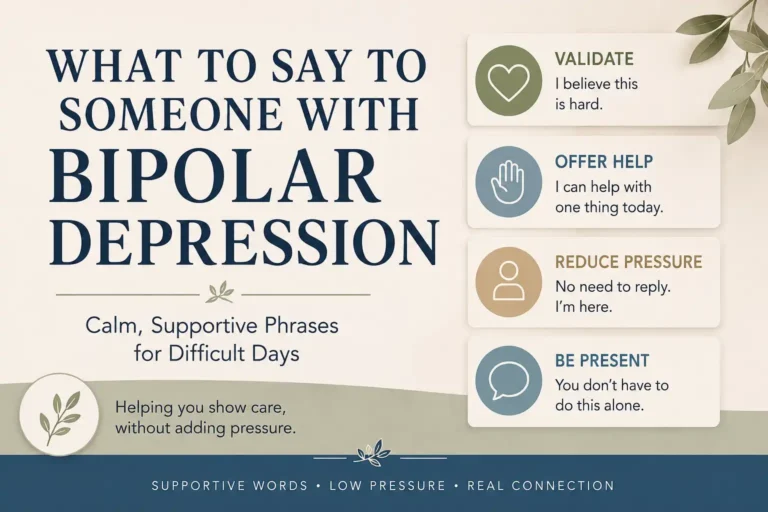
Supporting Children of Bipolar Parents: What Kids Need Most
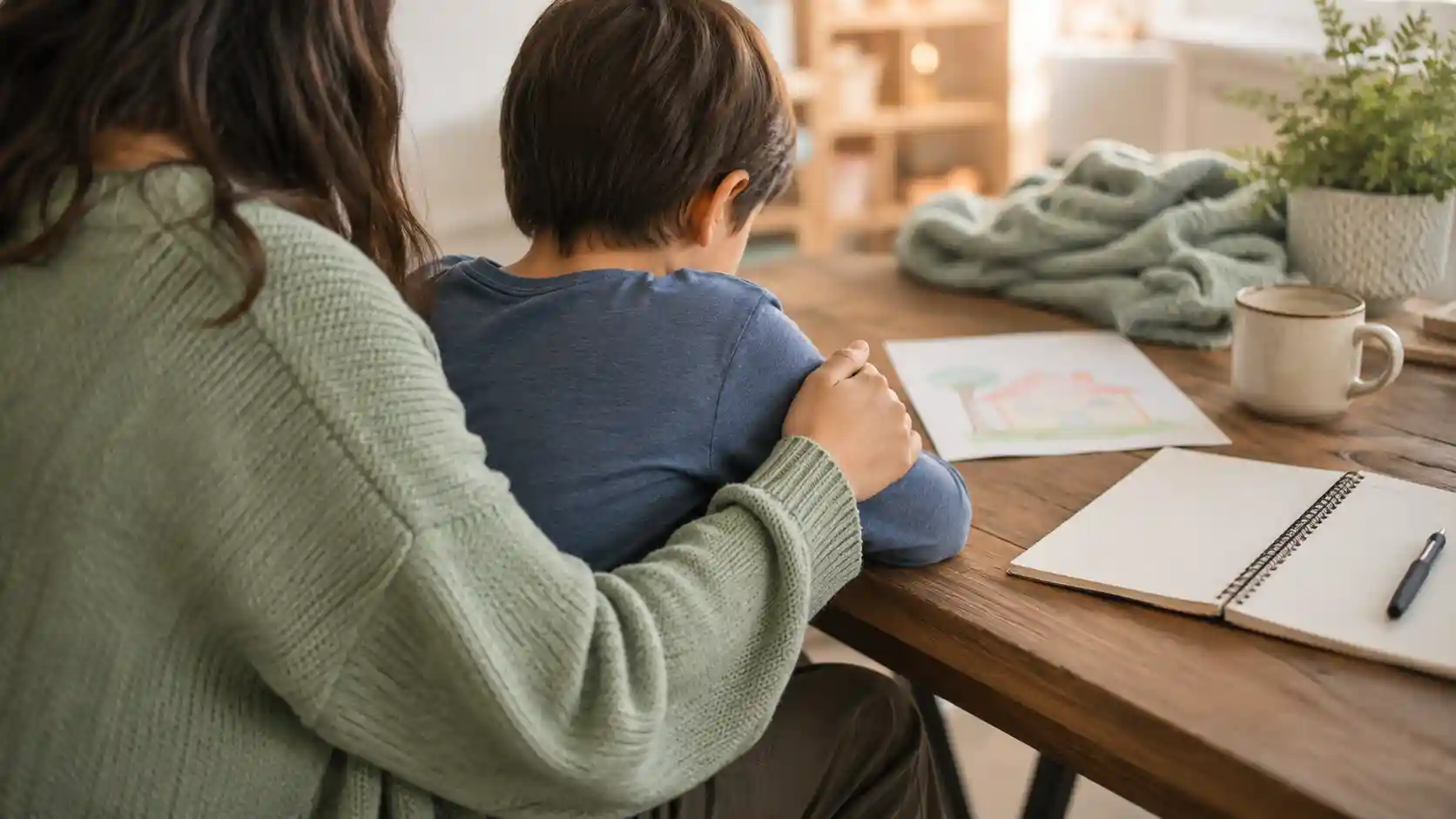
Quick answer: Children of bipolar parents need safety, honest age-appropriate explanations, predictable routines, permission to have their own feelings, and trusted adults who do not ask them to become the parent’s caregiver. A child can love a parent with bipolar disorder and still feel confused, scared, angry, protective, embarrassed, or exhausted. The goal is not to make the child responsible for the illness. The goal is to help the child feel safe, seen, and supported.
Important note: This article is for education and family support only. It is not a diagnosis, treatment plan, legal recommendation, child protection assessment, or emergency response plan. Always seek advice from a licensed mental health professional, pediatrician, school counselor, child therapist, or qualified provider if you are worried about a child’s emotional health or safety. If a child or adult is in immediate danger, call local emergency services. In the United States, call or text 988 for crisis support.
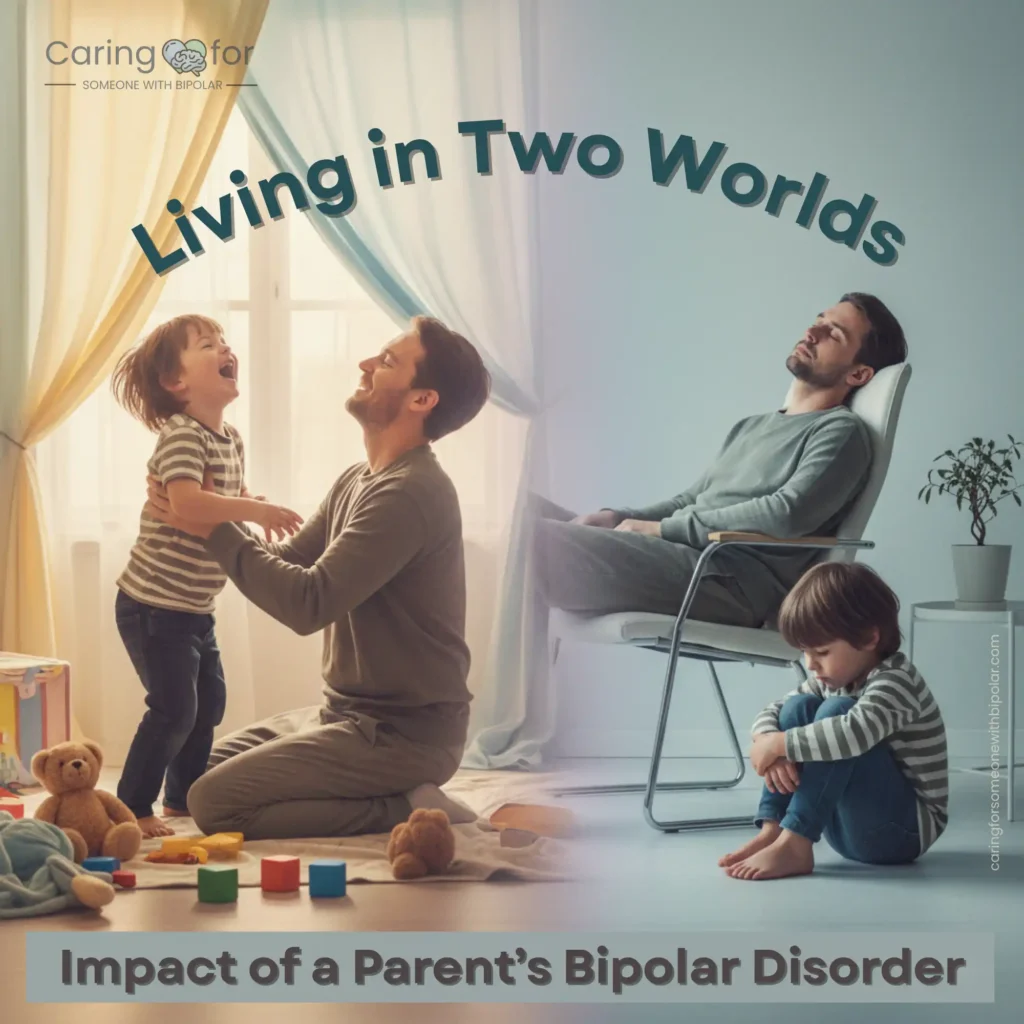
Children of bipolar parents often feel like they are living in two worlds: one full of warmth, love, play, and closeness, and another shaped by confusion, silence, unpredictable moods, or frightening episodes. They may not understand the words mania, hypomania, or depression, but they notice when a parent changes.
If you are the other parent, a grandparent, aunt, uncle, adult sibling, teacher, therapist, or family friend, your support can make a lasting difference. Children do not need perfect adults. They need steady adults who tell the truth gently, protect them from adult responsibilities, and remind them that the illness is not their fault.
If you are still learning the basics, start with our guide to types of bipolar disorder. It can help you understand the diagnosis without placing that burden on the child.
What Children of Bipolar Parents Need Most
| What the Child Needs | Why It Matters | What an Adult Can Do |
|---|---|---|
| Safety | Children cannot process emotions well when they feel physically or emotionally unsafe. | Create a calm place to go, name trusted adults, and know when to seek outside help. |
| Simple truth | Silence can make children blame themselves or imagine something worse. | Use age-appropriate words: “Your parent has an illness that affects mood and energy.” |
| Reassurance | Many children wonder if they caused the mood change. | Repeat clearly: “This is not your fault, and it is not your job to fix it.” |
| Routine | Predictability helps children feel anchored when a parent’s mood is unpredictable. | Keep meals, school, bedtime, and trusted check-ins as consistent as possible. |
| Permission to feel | Children may hide anger, fear, sadness, or embarrassment to protect the parent. | Let them say hard things without correcting their feelings. |
| Support outside the home | One adult cannot carry everything alone. | Involve a therapist, pediatrician, school counselor, relative, or support group when needed. |
The strongest support is usually simple: tell the truth gently, keep the child out of adult roles, and make sure there is a plan for hard days.
How a Parent’s Bipolar Disorder Can Affect Children
Children are highly perceptive. They may not know the clinical language, but they may recognize when a parent becomes unusually energized, irritable, impulsive, withdrawn, tearful, unavailable, or hard to predict. Over time, that uncertainty can affect their sense of safety and trust.
This does not mean every child of a bipolar parent will be harmed. Many parents with bipolar disorder love their children deeply and parent with warmth, creativity, and devotion. With treatment, support, and planning, families can be stable and loving. But when symptoms are untreated, severe, recurring, or combined with conflict, substance misuse, violence, financial chaos, or emotional neglect, children need more protection and support.
The National Institute of Mental Health explains that bipolar disorder involves shifts in mood, energy, activity, concentration, and the ability to carry out day-to-day tasks. Those shifts can affect family life, especially when children do not understand what is happening.
Common Emotional Impacts for Children of Bipolar Parents
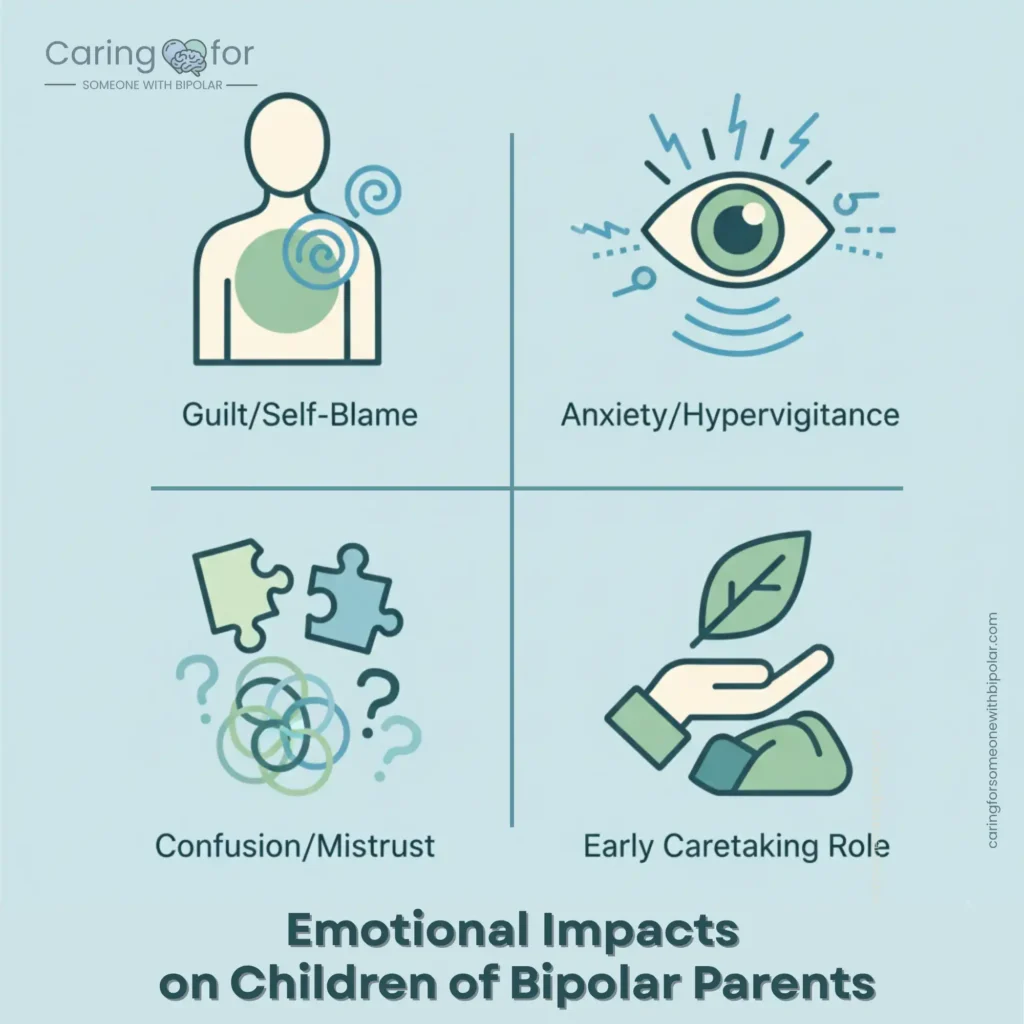
- Confusion: “Why is my parent acting different today?”
- Self-blame: “Did I do something wrong?”
- Anxiety: “What mood will I come home to?”
- Hypervigilance: constantly watching tone, facial expression, sleep, or tension.
- Embarrassment: worrying that friends or teachers will notice.
- Anger: feeling hurt by broken promises, yelling, withdrawal, or unpredictability.
- Parentification: feeling responsible for calming, protecting, or caring for the parent.
- Loyalty conflict: loving the parent while also feeling afraid or resentful.
What to Say to a Child About a Parent’s Bipolar Disorder
Children often do better when adults explain what is happening in simple, honest language. Silence may feel protective, but children usually notice more than adults think. When no one explains, they may create their own explanation, and that explanation often includes self-blame.
The goal is not to give a child adult-level details. The goal is to give them a safe story that is true enough to reduce fear.
Simple Script for Younger Children
“Mom/Dad has an illness called bipolar disorder. It can make their mood and energy go very high or very low. You did not cause it. It is not your job to fix it. The adults are working on getting help.”
Simple Script for Older Children and Teens
“Bipolar disorder affects mood, sleep, energy, and behavior. Sometimes your parent may seem very energized, irritable, impulsive, sad, or withdrawn. That does not mean you caused it. You are allowed to love them and still feel upset. We are going to make sure you have support too.”
When the Parent Has an Episode
“Your parent is having a hard mental health day. The adults are handling it. Your job is to stay safe, go to school, rest, and tell me how you are feeling.”
Age-by-Age Support for Children of Bipolar Parents
| Age Group | What They May Notice | Helpful Support |
|---|---|---|
| Young children | Changes in voice, energy, crying, yelling, absence, or bedtime disruption. | Use simple words, repeat reassurance, keep routines, and offer comfort objects or safe adults. |
| School-age children | Mood shifts, broken plans, family tension, or feeling responsible for helping. | Explain that bipolar disorder is not their fault, keep school routines, and let them ask questions. |
| Preteens | Embarrassment, anger, worry about friends noticing, or trying to manage the household. | Give more detail, protect their privacy, encourage safe outlets, and prevent parentification. |
| Teenagers | Fear, resentment, loyalty conflict, anxiety about genetics, or wanting distance. | Respect their feelings, offer therapy, discuss safety plans, and avoid making them the second parent. |
| Adult children | Burnout, guilt, financial worry, boundaries, or fear of repeating family patterns. | Encourage boundaries, education, therapy, support groups, and realistic caregiver roles. |
Older children and teens may ask harder questions. They may want to know whether they will develop bipolar disorder too, whether the parent will get better, or whether the family will ever feel normal again. Answer honestly, but do not overload them.
Signs a Child May Be Struggling
Some children say directly, “I am scared” or “I hate this.” Others show distress through behavior, sleep, school, body symptoms, anger, withdrawal, perfectionism, or caretaking.
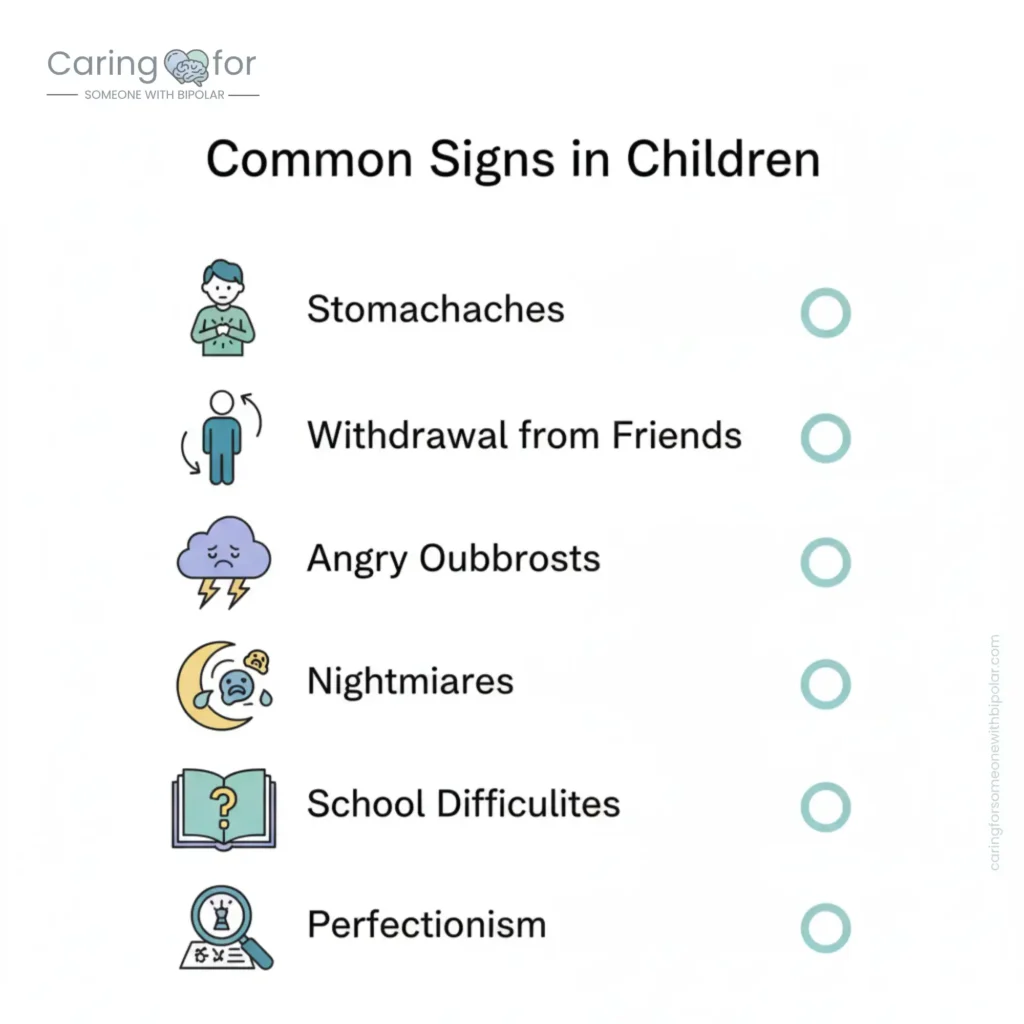
| Possible Sign | What It May Mean | What to Do Next |
|---|---|---|
| Sleep problems | The child may feel unsafe, worried, or overstimulated. | Strengthen bedtime routines and ask gentle questions about fear or worry. |
| School decline | Stress at home may be affecting focus, attendance, or motivation. | Consider speaking with a school counselor or trusted teacher. |
| Stomachaches or headaches | Stress can show up physically, especially in younger children. | Talk with a pediatrician and explore emotional stressors. |
| Over-helping the parent | The child may be taking on an adult role. | Clearly say: “You are the child. The adults are responsible for care.” |
| Anger or irritability | The child may feel powerless, hurt, or overwhelmed. | Validate the feeling while keeping behavior boundaries. |
| Withdrawal | The child may be trying not to add stress or may feel emotionally shut down. | Create quiet one-on-one time and offer therapy if needed. |
| Fear of leaving the parent alone | The child may feel responsible for the parent’s safety. | Create an adult crisis plan and reassure the child that safety is not their job. |
| Talk of self-harm or hopelessness | This needs immediate attention. | Contact emergency services, 988 in the U.S., or a qualified crisis provider. |
If you are worried about patterns that continue for more than a short period, involve a qualified professional. A pediatrician, child therapist, school counselor, or family therapist can help you decide what kind of support is appropriate.
How to Support Children Emotionally and Practically
Supporting children of bipolar parents is not only about explaining the diagnosis. It is about building a home and support network where the child can still be a child.
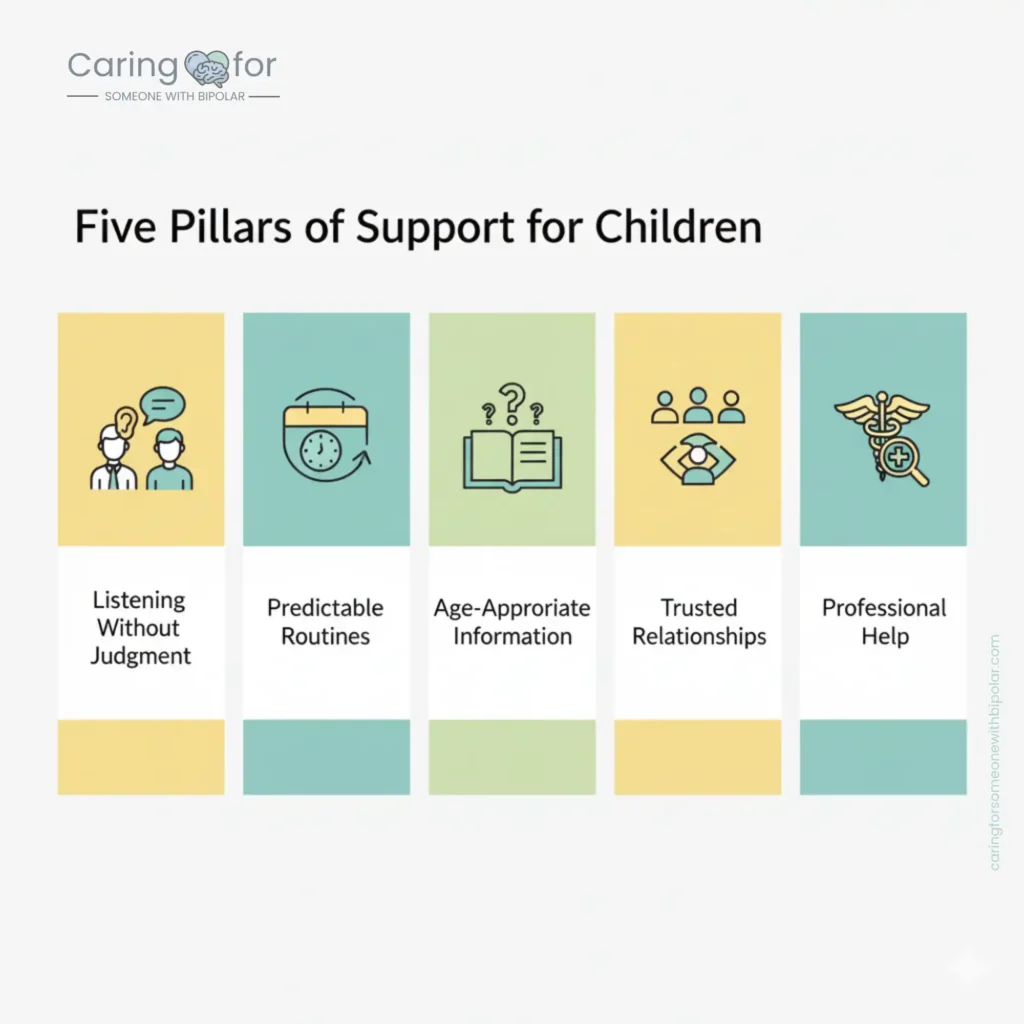
1. Listen Without Correcting Their Feelings
A child may say something painful, such as “I hate when Dad gets like that” or “I wish Mom was normal.” Try not to rush to defend the parent. The child is not making a clinical statement. They are expressing pain.
Try:
- “That sounds really hard.”
- “You are allowed to feel angry.”
- “You can love your parent and still feel upset.”
- “You do not have to protect me from your feelings.”
2. Keep Routines as Predictable as Possible
Predictability helps children feel safer. Routines do not need to be perfect. Even small anchors can help.
- regular bedtime when possible;
- school attendance;
- meals at predictable times;
- homework support;
- time with friends;
- quiet bedtime check-ins;
- a trusted adult who can step in when symptoms escalate.
YoungMinds notes that familiar routines can help children feel safe and supported when things feel uncertain. That is especially important in a home where a parent’s symptoms may change the emotional weather quickly.
3. Protect the Child From Adult Responsibilities
Children should not be the crisis manager, therapist, marriage counselor, medication monitor, financial rescuer, or emotional caretaker for a parent.
A child can help in age-appropriate ways, such as tidying their room or choosing a family activity. But they should not be responsible for keeping a parent alive, stable, sober, medicated, calm, or financially safe.
Use this script often:
“You are not responsible for managing your parent’s illness. The adults are responsible for adult problems.”
If you are struggling to separate support from over-responsibility, read how to support someone with bipolar without enabling.
4. Help the Child Name What Is Happening Without Blame
Children need language, but not shame. Avoid labels like “crazy,” “bad,” “lazy,” or “selfish.” Instead, separate the person from the symptoms.
| Instead of Saying | Try Saying |
|---|---|
| “Your parent is acting crazy.” | “Your parent is having symptoms and needs adult support.” |
| “They do not care about us.” | “Depression can make people withdraw, but your feelings still matter.” |
| “Do not talk about it.” | “You can ask questions. I will answer in a safe way.” |
| “You need to be strong for them.” | “You get to be the child. The adults will handle the adult parts.” |
| “Everything is fine.” | “Things are hard right now, and we are making a plan.” |
5. Build a Safe Adult Network
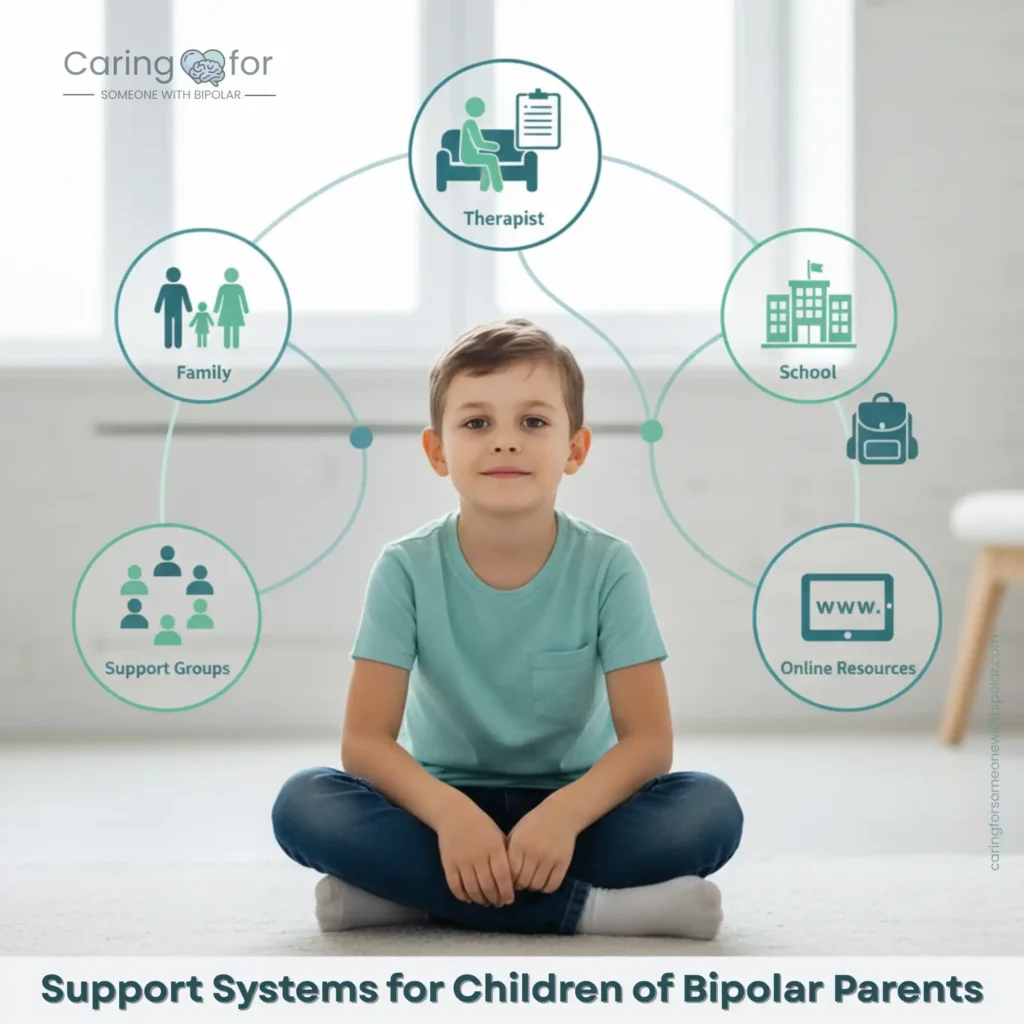
No child should have only one overwhelmed adult to turn to. A child’s support network might include:
- the other parent;
- a grandparent;
- an aunt or uncle;
- a trusted family friend;
- a school counselor;
- a pediatrician;
- a therapist;
- a coach, faith leader, or mentor;
- a crisis service when safety is at risk.
When a Parent Is Manic, Depressed, or Unstable
Children need different kinds of support depending on what is happening at home.
During Possible Mania or Hypomania
A child may feel overstimulated, embarrassed, excited, scared, or confused by a parent who is suddenly sleeping less, talking rapidly, making big plans, spending impulsively, or becoming unusually irritable.
Helpful adult response:
- reduce the child’s exposure to arguments;
- avoid asking the child to reason with the parent;
- keep the child’s bedtime and school routine steady;
- move adult conversations away from the child;
- use a bipolar emergency plan if symptoms escalate;
- get professional or crisis support if safety is at risk.
You may also find this guide useful: what to say during a manic episode.
During Depression
A depressed parent may withdraw, sleep more, cry, miss plans, or seem emotionally unavailable. Children may interpret this as rejection.
Helpful adult response:
- explain that depression is not the child’s fault;
- avoid making the child responsible for cheering the parent up;
- keep routines steady;
- help the child maintain normal activities;
- offer extra reassurance and one-on-one time;
- involve professionals when symptoms affect safety or caregiving.
During Conflict or Unsafe Behavior
If there is yelling, threats, violence, dangerous driving, substance misuse, weapons, severe psychosis, suicidal statements, or a child is afraid to be home, treat it as a safety issue, not a communication problem.
Children should not be left to manage a crisis. In the United States, call or text 988 for mental health crisis support. If there is immediate danger, call emergency services.
Should You Tell the School?
You do not have to share private family details with everyone. But when a child is struggling, it may help to tell one trusted school professional enough to support the child.
You might say:
“Our family is dealing with a parent’s mental health condition. I do not want to share unnecessary details, but I want you to know that my child may be under stress. Can you let me know if you notice changes in attendance, focus, mood, or behavior?”
A school counselor or teacher may help the child with:
- a quiet place to go when overwhelmed;
- extra emotional check-ins;
- support with homework during crisis periods;
- watching for changes in mood, sleepiness, attendance, or social behavior;
- connecting the family to school-based resources.
When a Child Needs Professional Help
Consider professional support if the child shows ongoing distress, major behavior changes, fear, self-blame, sleep problems, school decline, panic, withdrawal, aggression, self-harm talk, or pressure to care for the parent.
Possible supports include:
- pediatrician;
- child therapist;
- family therapist;
- school counselor;
- child psychiatrist when appropriate;
- trauma-informed clinician;
- support group for families affected by mental illness.
Professional support does not mean the family has failed. It means the child gets a place where their feelings do not have to compete with the parent’s symptoms.
How to Help Without Blaming the Bipolar Parent
Many children love the parent who has bipolar disorder deeply. They may defend them, worry about them, and feel guilty for being upset. Speak in a way that protects both truth and dignity.
Try to hold three truths together:
- The parent has a real mental health condition.
- The child’s feelings and safety still matter.
- The child is not responsible for fixing the parent.
If you are the well parent or caregiver, your tone matters. If you repeatedly shame the bipolar parent in front of the child, the child may feel forced to choose sides. And if you deny the problem completely, the child may feel alone with what they see. Aim for honest, calm, non-blaming language.
Support for the Caregiver Matters Too
Supporting children of bipolar parents can be emotionally heavy for the other adults in the family. You may be trying to protect the child, support the parent, manage the household, and hide your own fear at the same time.
You also need support.
These guides may help:
- Supporting a Spouse With Bipolar Disorder
- How to Communicate With Someone Who Has Bipolar Disorder
- Setting Boundaries With Someone With Bipolar Disorder
- Bipolar Caregiver Burnout
- Protecting Grandchildren From a Bipolar Parent
- Untreated Bipolar Disorder
Trusted Resources for Families
- CAMH: When a Parent Has Bipolar Disorder, What Kids Want to Know
- National Institute of Mental Health: Bipolar Disorder
- NIMH: Bipolar Disorder in Children and Teens
- NAMI Family Support Group
- NAMI: Family Members and Caregivers
- DBSA Support
- Child Mind Institute
- 988 Suicide & Crisis Lifeline
Frequently Asked Questions About Children of Bipolar Parents
What do children of bipolar parents need most?
Children need safety, honest age-appropriate explanations, predictable routines, permission to feel their own emotions, and trusted adults who do not make them responsible for the parent’s illness.
How do I explain bipolar disorder to a child?
Use simple language. You can say: “Bipolar disorder is an illness that affects mood, energy, sleep, and behavior. You did not cause it, and it is not your job to fix it.” Keep the explanation short and let the child ask questions over time.
Can a child be affected by a parent’s bipolar disorder?
Yes, some children may feel anxious, confused, guilty, angry, protective, or overly responsible when a parent’s symptoms affect family life. The impact depends on many things, including symptom severity, treatment, family support, conflict, safety, and the child’s age and temperament.
Is bipolar disorder hereditary?
Family history can increase risk, but it does not mean a child will definitely develop bipolar disorder. If a child has concerning mood, sleep, energy, or behavior changes, speak with a qualified pediatrician or mental health professional instead of assuming a diagnosis.
Should children know their parent has bipolar disorder?
In many families, children benefit from honest, age-appropriate information. They often notice changes anyway. A simple explanation can reduce fear and self-blame. The details should match the child’s age, maturity, and emotional safety.
What should I do if the child is scared of the bipolar parent?
Take the fear seriously. Ask what happened, make sure the child has a safe place and trusted adult, and avoid forcing closeness during unsafe or unstable moments. If there are threats, violence, dangerous behavior, or immediate risk, seek emergency or crisis support.
How can I stop a child from becoming the caregiver?
Say clearly and often: “You are the child. The adults are responsible for adult problems.” Do not ask the child to manage medication, calm episodes, protect siblings alone, monitor safety, or become the emotional support person for the parent.
Should I tell the school about the parent’s bipolar disorder?
You do not have to share private details with everyone. But if the child is struggling, telling one trusted school counselor or teacher that the child is under family stress may help them provide support and watch for changes.
When should a child see a therapist?
Consider therapy if the child has ongoing anxiety, sadness, sleep problems, school decline, withdrawal, anger, self-blame, panic, fear at home, or pressure to care for the parent. Therapy gives the child a private place to process feelings safely.
Can children still have a good relationship with a bipolar parent?
Yes. Many children have loving relationships with a parent who has bipolar disorder, especially when the parent receives treatment, the family has support, the child is not made responsible for symptoms, and safety is protected during episodes.
Final Takeaway
Supporting children of bipolar parents is not about explaining everything perfectly. It is about giving children what bipolar disorder can sometimes disrupt: safety, honesty, routine, emotional permission, and dependable adults.
A child should not have to guess what is happening. They should not have to manage the parent’s mood. They should not have to become the strongest person in the house.
You can say the words they may need to hear again and again:
“This is not your fault. You are not responsible for fixing it. You are loved. The adults are making a plan.”
Those words will not solve every hard day. But they can give a child something steady to hold onto while the adults do the work of building safety and support.