Start Here: Supporting a Loved One With Bipolar Disorder and Addiction
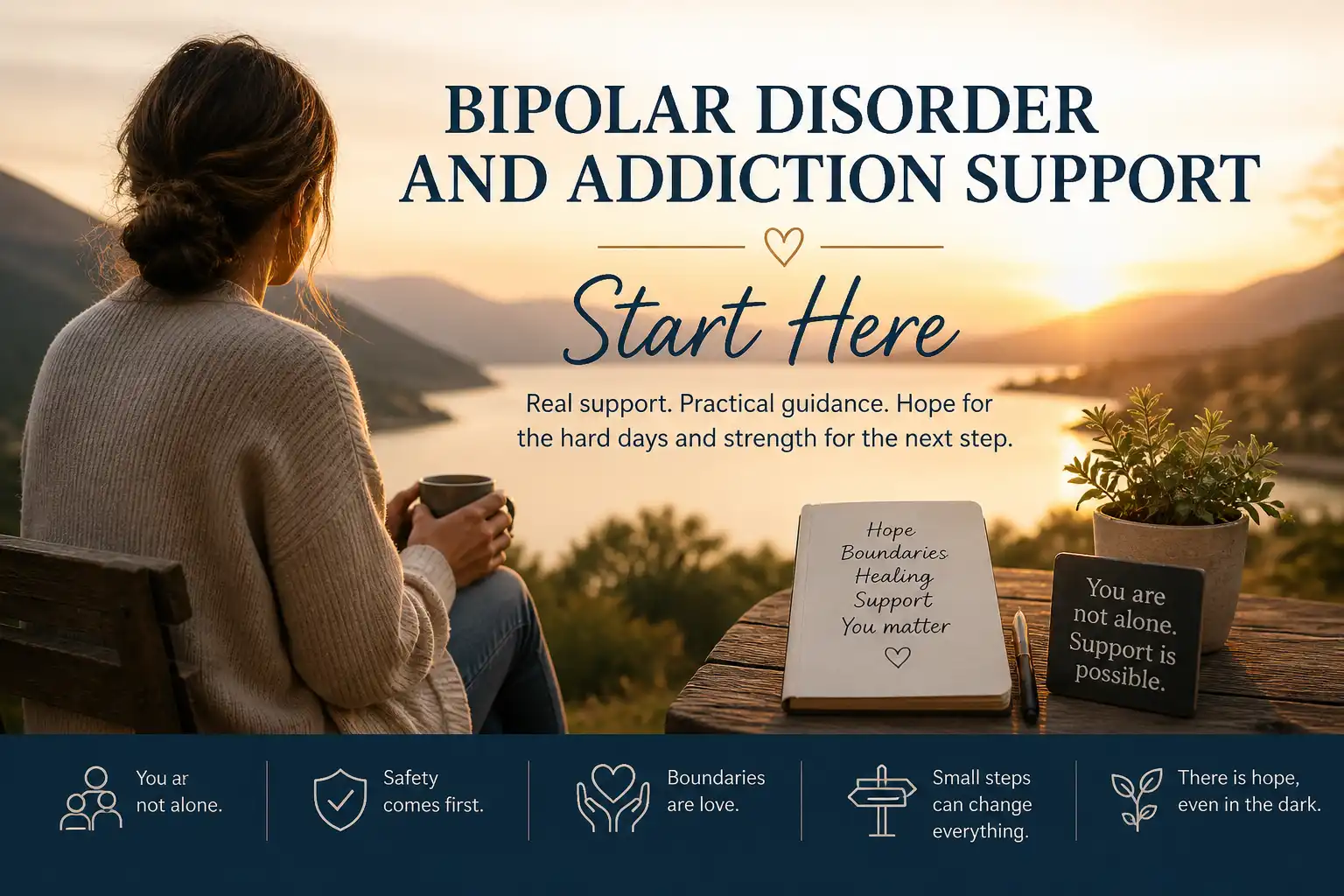
Quick answer: This site is for families who love someone with bipolar disorder and addiction. It shares lived caregiver experience, practical support, safety planning, and boundary-setting. It does not replace medical care, addiction treatment, crisis support, or emergency services.
My name here is Elena. It is a pen name I use to protect my son’s privacy and my own. I do not share identifying details, private messages, exact dates, legal details, or anything that could expose my family.
I created this site from lived experience as a mother supporting a son through bipolar disorder, substance use disorder, treatment refusal, crisis moments, broken promises, fear, hope, anger, guilt, and exhaustion.
Some details may be changed or left out. The lessons and emotions are real.
Why I Created This Site
When someone you love lives with bipolar disorder and addiction, daily life can feel impossible to predict. One day may feel calm. The next day may bring no sleep, anger, risky choices, money pressure, drug use, family conflict, or fear that something worse may happen.
One of the hardest questions is this: is it bipolar disorder, drug use, or both?
I know how painful that question can be. I also know how hard it is to keep your own life steady when someone you love changes mood so sharply that you no longer know what to plan, what to believe, or what to say.
This site exists for parents, partners, siblings, adult children, and close friends who feel alone in that kind of storm.
What This Site Can Help With
- Understanding sudden mood changes without trying to diagnose
- Knowing when mania, drug use, or both may be part of the problem
- Talking with someone who refuses help
- Setting limits around money, drugs, safety, and the home
- Preparing for crisis moments before they happen
- Protecting children, siblings, partners, and other family members
- Facing caregiver burnout, guilt, fear, and anger
- Knowing when to contact a professional, 988, 911, or the emergency room
What This Site Cannot Do
This site cannot diagnose bipolar disorder, addiction, psychosis, withdrawal, or any mental health condition. It cannot tell you whether your loved one needs medication, hospital care, detox, rehab, or legal action.
The National Institute of Mental Health explains that bipolar disorder can cause clear shifts in mood, energy, activity, and daily function. It also explains that substance use and mental disorders can overlap, which can make diagnosis and care harder without trained professionals. National Institute of Mental Health
When bipolar disorder and substance use happen together, families should not try to guess alone. A doctor, psychiatrist, therapist, addiction specialist, or crisis team may be needed.
Where to Start
- To understand daily support, start with How to Support Someone With Bipolar Disorder.
- For unsafe or unpredictable moments, read Bipolar Emergency Plan.
- When conversations often turn into conflict, read Communication With Someone Who Has Bipolar.
- Feeling guilty about saying no is common. The guide on Setting Boundaries With Someone With Bipolar Disorder can help.
- Children need extra care when they are exposed to crisis moments. Read Supporting Children of Bipolar Parents.
- If you are not sure what you are seeing yet, start with bipolar disorder or drug use: what families can track. It can help you organize sleep, mood, substance-related concerns, and safety observations before seeking support.
When Safety Comes First
If someone may hurt themselves or another person, call 911 or go to the nearest emergency room.
If the person is in suicidal, mental health, substance use, or emotional crisis in the United States, call or text 988. SAMHSA describes 988 as support for suicide, mental health, and substance use crisis. SAMHSA 988 Lifeline
You do not have to handle a crisis alone.
A Note From Elena
I cannot tell every detail of my story. I will not expose my son, his child, his partner, his siblings, or our private life.
But I can share what this pain has taught me.
I can talk about the fear of sudden mood changes. The question of bipolar disorder, drugs, or both deserves honest attention. Money pressure, broken promises, family pain, and the guilt of setting limits also need a safe place. Even when safety requires distance, love can still remain.
This site is not here to judge the person who is ill. It is also not here to ask caregivers to disappear inside another person’s crisis.
Both truths can exist: your loved one may be suffering, and you may need protection too.
Related Guides
- How to Support Someone With Bipolar Disorder
- Bipolar Emergency Plan
- Help Someone During a Manic Episode
- What Not to Say to Someone With Bipolar
- Setting Boundaries With Someone With Bipolar Disorder

About the Author: Elena
Elena is the founder of this platform and a dedicated mental health advocate. As the mother of a young man navigating a complex dual diagnosis of severe bipolar disorder and addiction, she writes from the trenches of the caregiver experience. Elena’s mission is to break the silence surrounding severe mental illness, caregiver burnout, and the painful reality of treatment refusal. Through her lived experience, she provides practical tools and emotional validation for parents, spouses, and families trying to survive the rollercoaster of bipolar disorder.