

You’re Not Alone
Supporting someone with bipolar disorder can feel confusing, exhausting, and lonely. Find practical guidance, compassionate support, and clear next steps for your family.
Caring for Someone With Bipolar was created for caregivers, spouses, parents, adult children, grandparents, and family members who need calm, practical guidance without judgment.
Here, you’ll find communication scripts, boundary examples, crisis planning tools, family support guides, and caregiver survival resources written with compassion and care.
If this is an emergency: If someone may hurt themselves or someone else, or you feel immediate danger, call your local emergency number. In the United States, you can call or text 988 for the Suicide & Crisis Lifeline. This website is educational and does not replace professional medical, legal, or emergency advice.
Start Here
If you are new to supporting someone with bipolar disorder, start with the guides below. They are designed to help you understand what may be happening, communicate more calmly, and protect your own well-being while still caring about your loved one.

Bipolar Basics
Learn the basics of bipolar disorder, including types, early signs, common misconceptions, and why treatment matters.
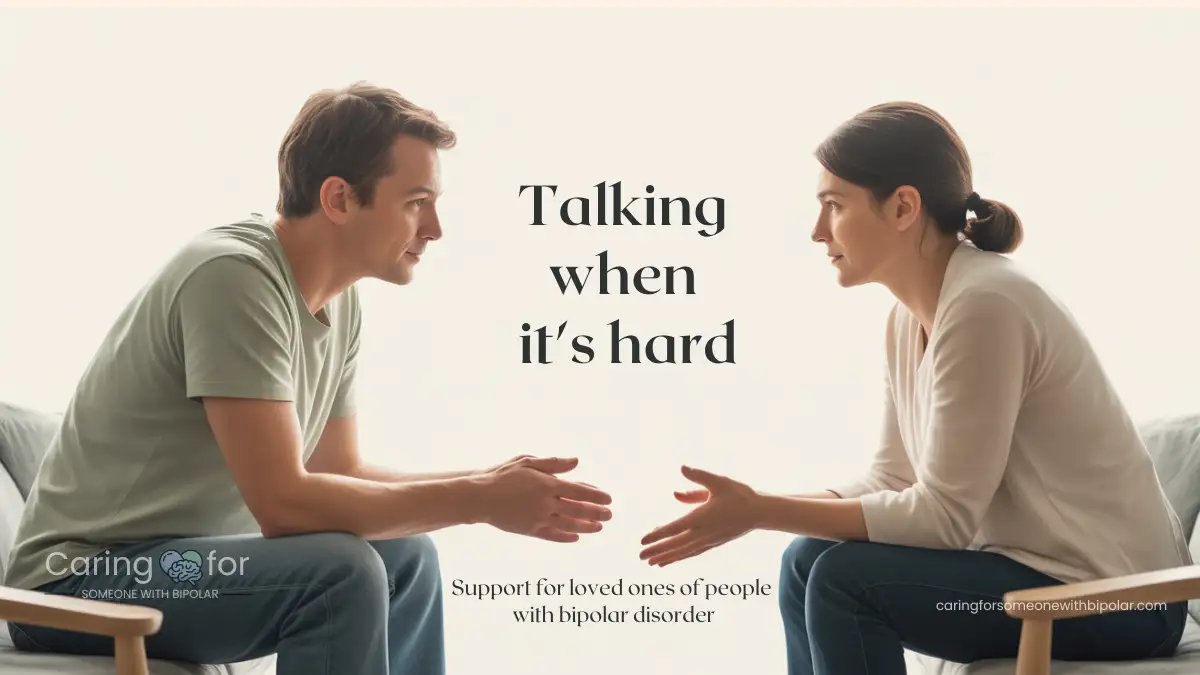
Communication Help
Find calm words for difficult moments, including what to say, what not to say, and how to avoid escalating conflict.

Boundaries & Enabling
Learn how to support someone with compassion while still protecting your time, finances, emotions, and safety.

Crisis & Safety
Prepare for manic episodes, refusal of help, emergency planning, and moments when professional support may be needed.
What Do You Need Help With Today?
Choose the situation that feels closest to what you are facing right now.
- What to do when someone with bipolar disorder refuses help
- What to say during a manic episode
- What not to say to someone with bipolar disorder
- How to support someone without enabling
- How to handle caregiver guilt
- Signs of bipolar caregiver burnout
- Financial safeguards after bipolar mania
- Protecting grandchildren from a bipolar parent
For Spouses, Parents, and Family Members
Bipolar disorder affects more than one person. It can change the emotional rhythm of a marriage, the stability of a household, the confidence of children, and the health of the caregiver.
These guides focus on the family side of bipolar disorder: how to respond, how to stay grounded, how to protect children, and how to avoid losing yourself in the caregiving role.
For Spouses
Support for partners trying to balance love, boundaries, safety, and emotional exhaustion.
For Children & Families
Guidance for helping children feel safe, seen, and supported when a parent has bipolar disorder.
For Grandparents
Practical support for grandparents worried about grandchildren living with instability, conflict, or crisis.
Free Caregiver Resources
When emotions are high, it is hard to think clearly. That is why simple scripts, checklists, and plans can help caregivers feel less alone and more prepared.

Bipolar Caregiver Starter Kit
We are preparing a free set of printable tools for difficult moments, including:
- A crisis preparation checklist
- Boundary script examples
- Questions to ask before a situation escalates
- A caregiver burnout self-check
Coming soon: The free caregiver starter kit will be available here.
Popular Guides
Explore some of our most useful guides for caregivers and families who need calm, clear, and practical support.
- What to Say When Setting Boundaries With Someone With Bipolar Disorder
- Setting Boundaries With a Bipolar Loved One: A 10-Step Framework
- How to Talk to Someone With Bipolar Disorder: Calm Communication Scripts
- How to Help Someone During a Manic Episode
- Untreated Bipolar Disorder: Risks, Timelines, and Safe Steps
- Bipolar Disorder and Addiction: Signs, Boundaries, and Family Help

A Quiet Caregiver Story Told With Compassion and Care
I created this space for people who love someone with bipolar disorder and are trying to do the right thing without losing themselves.
This site is not here to shame your loved one, blame you, or offer easy answers to complicated situations. It is here to give you calm words, practical next steps, and support for the moments when caregiving feels heavy.
You deserve guidance too.
Important Note
The information on this website is for educational and caregiver support purposes only. It is not medical advice, legal advice, therapy, diagnosis, or emergency support. Bipolar disorder should be assessed and treated by qualified mental health professionals. If you are worried about safety, crisis, self-harm, violence, or immediate danger, contact emergency services or a crisis line right away.
Latest Support Guides
Explore the newest articles for caregivers and families.