Untreated Bipolar Disorder: Risks, Warning Signs, and Safe Next Steps
Quick answer: Untreated bipolar disorder can affect mood, sleep, judgment, relationships, work, school, money, parenting, and safety. Without adequate treatment, mood episodes may become more frequent over time for many people. Families should not try to diagnose, medicate, or manage the illness alone. The safest next steps are to track clear changes, protect safety, encourage professional care, and build a crisis plan before the next emergency.
Important note: This article is for general education and caregiver support only. It is not medical, psychiatric, legal, financial, or emergency advice. If someone is talking about suicide, self-harm, harming others, behaving violently, experiencing severe confusion, psychosis, unsafe driving, or immediate danger, contact local emergency services. In the United States, call or text 988 for crisis support.
When a loved one may have untreated bipolar disorder, families often feel caught between worry, confusion, and fear of saying the wrong thing. You may notice sleep changes, intense energy, irritability, impulsive decisions, long periods of depression, or behavior that feels very different from the person you know.
This guide explains what untreated bipolar disorder can affect, what families can track, when the situation becomes urgent, and what safe next steps can look like. The goal is not to scare you or diagnose your loved one from the outside. The goal is to help you respond with more clarity, less panic, and better support.
If you are still learning the basics, you may also want to read our guides on types of bipolar disorder and early signs of bipolar disorder.
What Does “Untreated Bipolar Disorder” Mean?
Untreated bipolar disorder usually means that a person is experiencing bipolar symptoms without consistent professional care, such as a proper evaluation, medication when appropriate, therapy, safety planning, or ongoing support. It can also mean that someone was diagnosed before but has stopped care, avoids follow-up, or refuses help during worsening symptoms.
Untreated does not mean the person is careless, bad, or unwilling to get better. Many people delay help because of fear, stigma, cost, side effects, past bad experiences, denial, reduced insight, or because symptoms feel confusing from the inside.
It also does not mean every difficult behavior is caused by bipolar disorder. Sleep loss, trauma, substance use, medical conditions, grief, medication side effects, and other mental health conditions can overlap. A qualified professional needs to assess the full picture.
What Can Happen When Bipolar Disorder Goes Untreated?
Bipolar disorder involves shifts in mood, energy, activity, concentration, sleep, and the ability to carry out daily tasks. When symptoms are not addressed, the impact can spread into many parts of life.
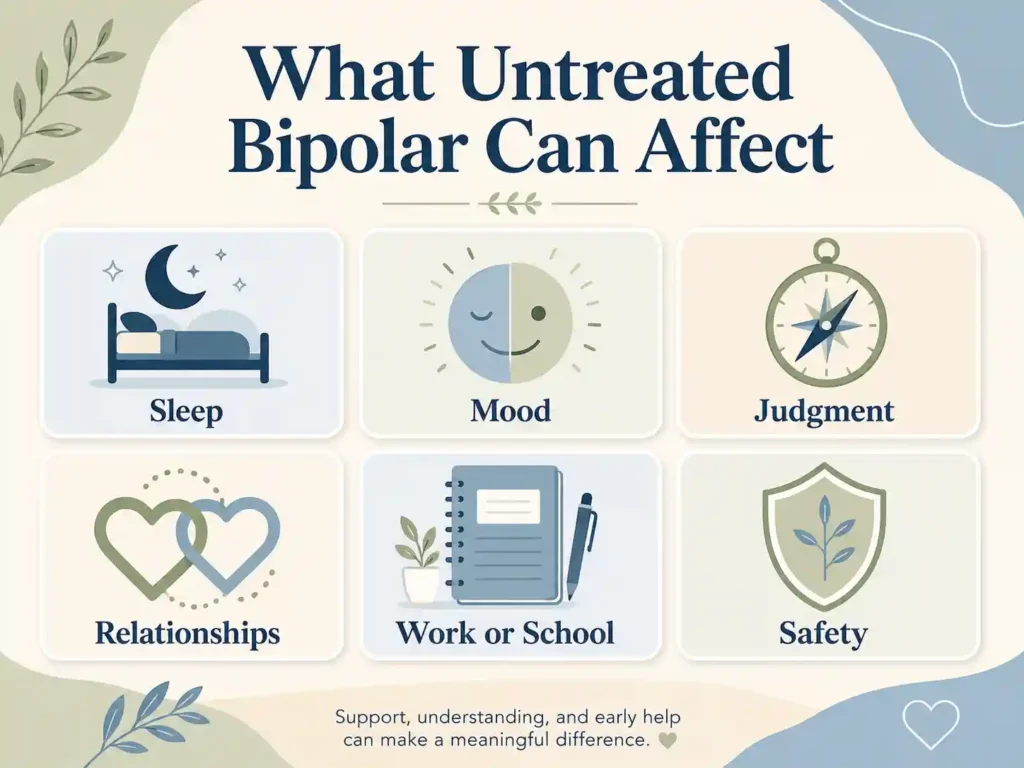
| Area Affected | What Families May Notice | Why It Matters |
|---|---|---|
| Sleep | Very little sleep, irregular sleep, sleeping much more than usual, or staying awake for long periods | Sleep changes can make mood symptoms harder to manage and may be an early warning sign. |
| Energy and mood | Unusual energy, agitation, irritability, intense confidence, depression, withdrawal, or hopelessness | Major changes from baseline can affect judgment, communication, work, parenting, and safety. |
| Judgment and risk | Fast decisions, risky spending, unsafe driving, sexual risk, conflict, or plans that feel unrealistic | Impulsive decisions can have lasting financial, legal, relational, or safety consequences. |
| Relationships | Arguments, mistrust, emotional distance, repeated apologies, blame, or fear in the household | Families may become exhausted, hypervigilant, or unsure how to respond. |
| Work or school | Missed deadlines, absences, conflict, sudden overcommitment, or inability to function during depression | Untreated symptoms can affect stability, income, education, and confidence. |
| Substance use | Alcohol or drug use to sleep, slow down, numb pain, or manage energy | Substance use can complicate mood symptoms and make professional assessment more important. |
| Safety | Suicidal language, threats, psychosis, severe confusion, unsafe driving, violence, or danger to children | These signs require urgent support, not a family argument or another attempt to persuade. |
For families dealing with possible substance use at the same time, read bipolar disorder or drug use: what families can track.
Does Untreated Bipolar Disorder Always Get Worse?
Not always in a simple or predictable way. Some people may have quieter periods between episodes, and symptoms can vary from person to person. But without adequate treatment, bipolar episodes may become more frequent over time for many people. That is one reason early evaluation and ongoing support matter.
The important point for caregivers is this: do not wait until everything becomes a crisis. If you are seeing repeated changes in sleep, mood, energy, judgment, spending, conflict, substance use, or safety, start writing down facts and look for qualified support.
Warning Signs Families Should Track
A family member cannot diagnose untreated bipolar disorder at home. What you can do is track changes clearly. This helps a clinician understand what has been happening over days, weeks, or months.
| Warning Sign | What to Track | When to Seek Help Faster |
|---|---|---|
| Less need for sleep | Hours slept, number of nights, energy level, unusual activity | If they are sleeping very little and becoming more impulsive, agitated, or unsafe |
| Racing speech or ideas | Fast talking, jumping topics, unrealistic plans, pressured messages | If communication becomes disorganized, threatening, or impossible to follow |
| Impulsive spending | Amounts, timing, purchases, debts, secret accounts, household impact | If rent, bills, debt, children, or shared safety are affected |
| Risky behavior | Driving, substance use, unsafe sex, aggression, legal risk, disappearing | If someone may be physically harmed or unable to make safe decisions |
| Depressive withdrawal | Isolation, missed work, poor hygiene, not eating, hopeless words | If they mention death, self-harm, feeling like a burden, or having no reason to live |
| Psychosis or severe confusion | Delusions, hallucinations, paranoia, severe disorientation, unusual beliefs | Seek urgent professional support, especially if safety is affected |
| Substance use concerns | Alcohol or drug use, intoxication, withdrawal-like changes, missing time | If overdose, unsafe driving, violence, or severe confusion is possible |
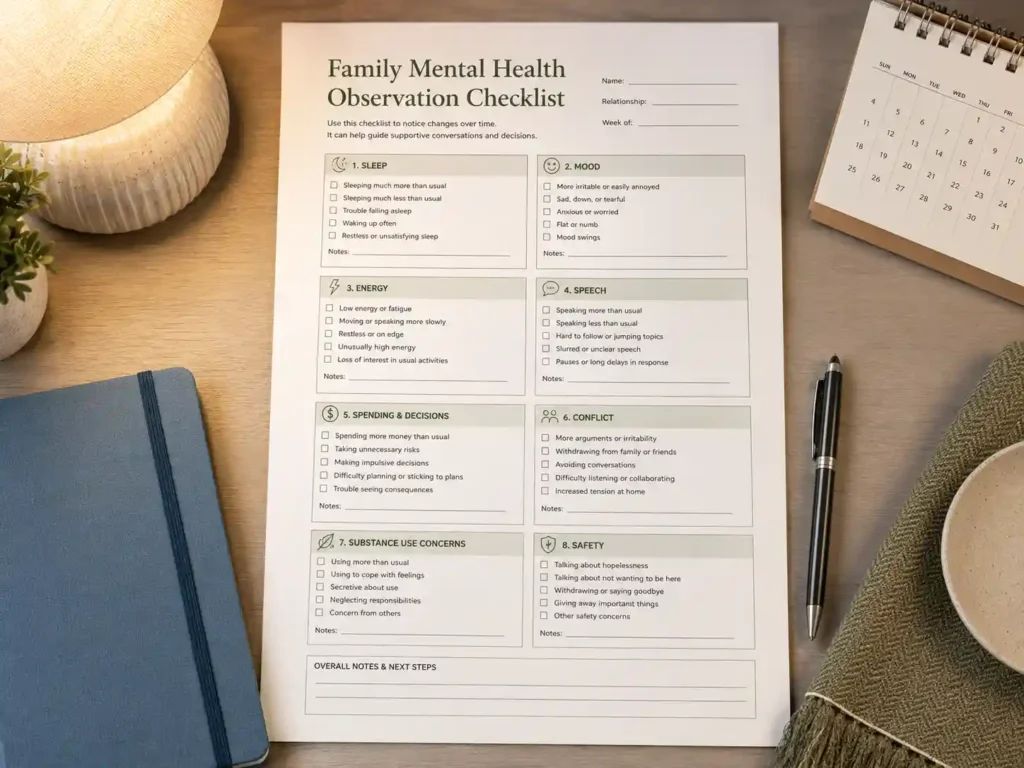
For a broader signs-based guide, see early signs of bipolar disorder.
When Untreated Bipolar Disorder Becomes Urgent
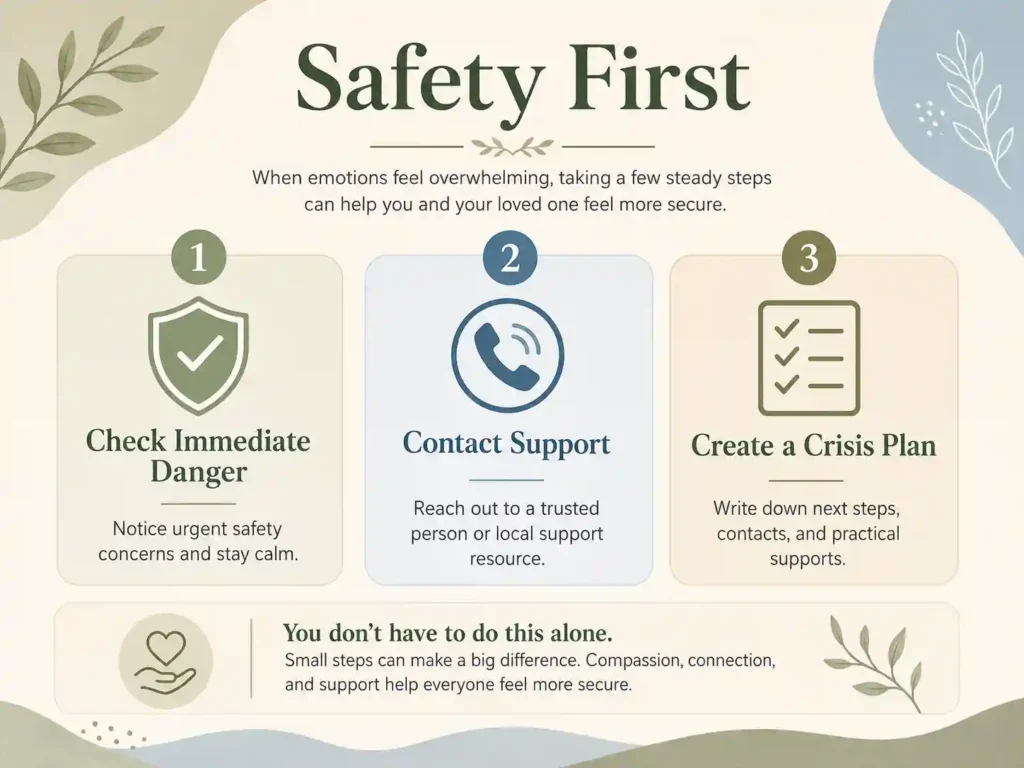
Some situations should not be handled as a normal family conversation. Treat the situation as urgent if you notice:
- talk of suicide, self-harm, wanting to die, or feeling like a burden;
- threats toward others;
- violence, intimidation, or behavior that makes someone feel unsafe;
- severe confusion, psychosis, paranoia, or loss of contact with reality;
- suspected overdose or severe intoxication;
- unsafe driving or dangerous risk-taking;
- children being put in danger;
- no sleep for days with escalating agitation, impulsivity, or risky behavior.
If there is immediate danger, contact emergency services. In the United States, call or text 988 for the Suicide & Crisis Lifeline. You can also use the online chat at 988lifeline.org.
If this type of risk has happened before, create a plan during a calmer moment. Our bipolar emergency plan guide can help you organize warning signs, contacts, safety steps, and boundaries before the next crisis.
Why Someone May Delay or Refuse Treatment
Families sometimes interpret refusal as stubbornness. Sometimes it is. But often, the reasons are more complicated.
| Possible Reason | What It Can Sound Like | Caregiver Response |
|---|---|---|
| Fear of being labeled | “Everyone will think I’m crazy.” | Use dignity-based language. Focus on support, not labels. |
| Fear of medication side effects | “Medication will ruin me.” | Encourage them to ask a qualified prescriber about risks, benefits, and options. |
| Reduced insight | “Nothing is wrong. You are the problem.” | Avoid arguing over labels. Track facts and protect safety. |
| Past bad care experience | “Therapy never helped me.” | Validate the experience while suggesting a different kind of support. |
| Cost or access barriers | “We can’t afford this.” | Look for community clinics, sliding-scale care, telehealth, or support resources. |
| Substance use or shame | “I don’t want anyone knowing.” | Encourage support that can assess both mood symptoms and substance use concerns. |
If your loved one is refusing help right now, read what to do when someone with bipolar refuses help.
Five Safe Steps Families Can Take First
You do not need to solve everything in one conversation. Start with steps that reduce confusion and protect safety.
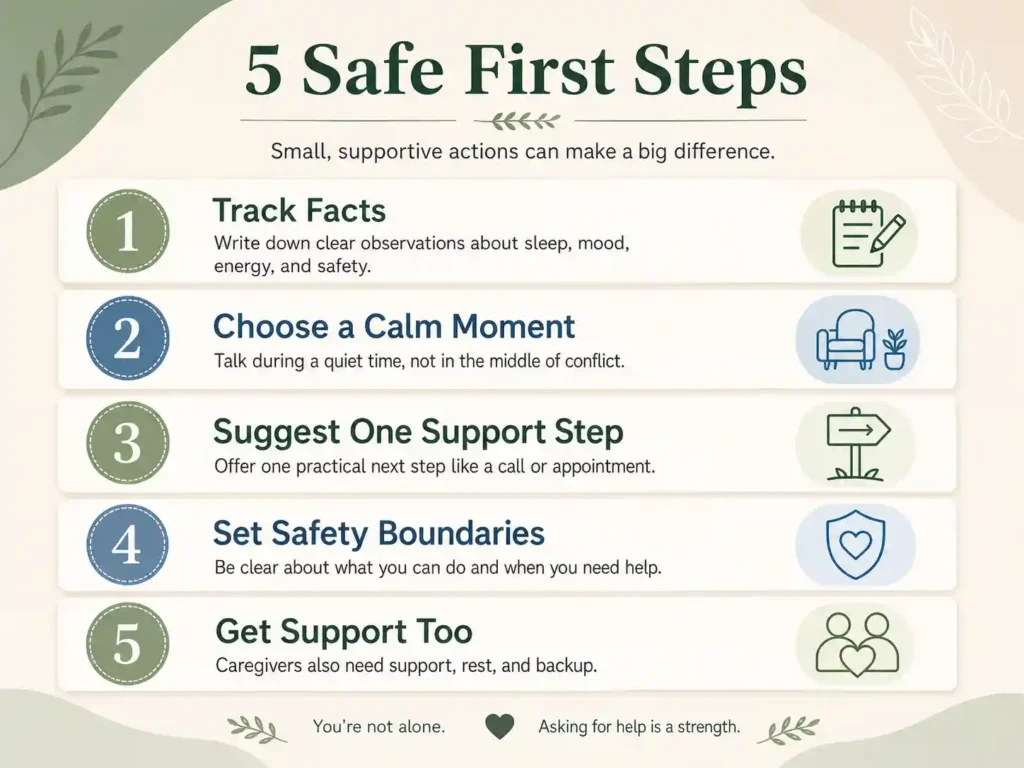
1. Track facts, not accusations
Write down what you observe: sleep, mood, energy, spending, speech, conflict, substance use concerns, work or school disruption, and safety risks. Dates and examples are more useful than labels.
Instead of writing “manic again,” write: “Slept two hours, drove at 2 a.m., spent money we had set aside for rent, spoke very quickly, and became angry when asked to rest.”
2. Choose a calm moment to talk
Major conversations usually go badly during escalation, intoxication, sleep loss, or intense depression. Choose a quieter time when the goal is one next step, not a complete treatment plan.
You can say:
“I am not trying to diagnose you. I am worried because sleep, mood, and conflict have changed, and I think we need support.”
3. Encourage one low-pressure professional step
A full treatment plan may feel overwhelming. A smaller step may be easier: a primary care appointment, a call to an existing clinician, a therapy intake, a telehealth screening, or a mental health evaluation.
If substance use may also be involved, consider resources that can assess both mental health and substance use concerns. In the United States, FindTreatment.gov can help people search for mental health and substance use treatment services.
4. Set boundaries around unsafe behavior
Boundaries are not punishment. They protect safety and reduce the damage untreated symptoms can cause. A boundary should be specific, realistic, and behavior-based.
Examples:
- “I will not discuss money decisions after midnight.”
- “I cannot let the children ride in the car if I believe driving is unsafe.”
- “I will leave the room if yelling or threats start.”
- “I cannot cover debts without a plan for professional support.”
For more help, read setting boundaries with someone who has bipolar disorder and what to say when setting boundaries.
5. Get support for yourself
Caregivers often become exhausted while trying to monitor every change. You need support too. A therapist, support group, trusted relative, crisis line, or family education resource can help you think more clearly and avoid carrying everything alone.
If you feel constantly on edge, read bipolar caregiver burnout.
How Treatment Can Help
Treatment for bipolar disorder often includes medication, psychotherapy, or a combination of treatments. A qualified professional may discuss mood stabilizers, atypical antipsychotics, therapy, sleep routines, family support, and relapse prevention depending on the person’s diagnosis, history, risks, and preferences.
Caregivers should avoid giving medication instructions, hiding medication, stopping medication, changing doses, or pressuring someone to take a specific drug. Medication decisions belong between the person and qualified health professionals.
If your family is trying to understand medication basics, see bipolar disorder medication types and uses.
Daily Routines That Can Support Stability
Daily routines do not replace treatment. But consistent routines can support stability, especially around sleep, meals, light, movement, and stress reduction.
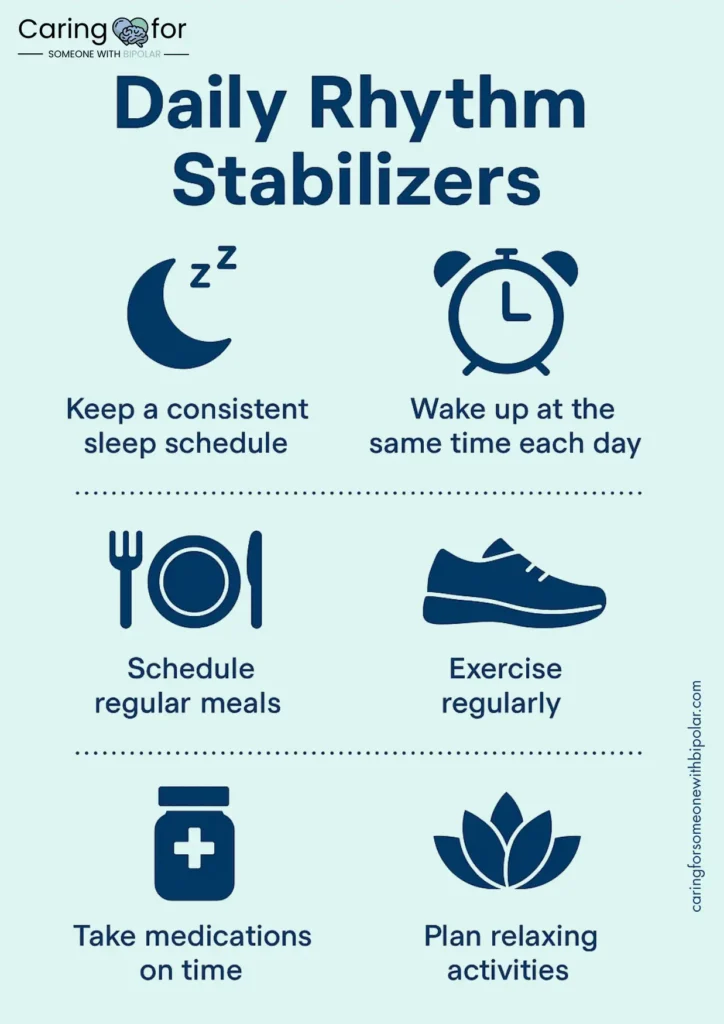
Helpful routines may include:
- a consistent wake time when possible;
- regular meals;
- reduced alcohol or substance use when relevant;
- morning light exposure;
- calmer evenings and less late-night conflict;
- simple mood and sleep tracking;
- planned check-ins with a trusted person;
- appointments and medication reminders when prescribed.
These habits are supports, not cures. If symptoms are severe, worsening, or unsafe, professional care matters more than another self-help routine.
What Not to Do When Bipolar Disorder Is Untreated
Fear can push families into control, blame, or panic. These reactions are understandable, but they often make the situation harder.
| Try to Avoid | Why It Can Backfire | Safer Alternative |
|---|---|---|
| Diagnosing during conflict | “You’re manic” can sound like an attack and increase defensiveness. | Describe specific changes: sleep, speech, spending, conflict, or safety. |
| Threatening without a plan | Empty threats can escalate fear and reduce trust. | Use clear boundaries you can actually follow. |
| Managing medication yourself | This can be unsafe and may damage trust. | Encourage questions for a qualified prescriber. |
| Ignoring substance use concerns | Substance use can complicate mood symptoms and safety. | Ask for support that can assess both concerns. |
| Carrying it alone | One caregiver can burn out quickly. | Build a support network before the next crisis. |
| Waiting for a perfect conversation | Safety risks can grow while everyone waits. | Take one small next step, especially if risk is increasing. |
For communication help, read how to communicate with someone who has bipolar disorder.
Related Guides for Families
- What to Do When Someone With Bipolar Refuses Help
- How to Create a Bipolar Emergency Plan
- Bipolar Disorder or Drug Use? What Families Can Track
- How to Support Someone With Bipolar Without Enabling
- Financial Safeguards in a Bipolar Marriage
- Supporting Children of Bipolar Parents
- Caregiver Guilt When Your Partner Has Bipolar Disorder
Trusted Resources
- National Institute of Mental Health: Bipolar Disorder
- NIMH: Help for Mental Illnesses
- 988 Suicide & Crisis Lifeline
- SAMHSA: 988 Suicide & Crisis Lifeline
- FindTreatment.gov
- NAMI: Bipolar Disorder
- NAMI Family Support Group
Frequently Asked Questions About Untreated Bipolar Disorder
What happens if bipolar disorder is left untreated?
Untreated bipolar disorder can affect sleep, mood, judgment, relationships, money, work, school, parenting, and safety. Mood episodes may become more frequent over time for many people without adequate treatment. A professional evaluation can help clarify what is happening and what support is appropriate.
Can untreated bipolar disorder get worse?
It can for many people, especially when sleep disruption, stress, substance use, or repeated crises continue without support. The course is not identical for everyone, but worsening patterns are a reason to seek help early rather than waiting for a severe episode.
Can someone with untreated bipolar disorder still have normal periods?
Yes. Some people may seem more stable between episodes. That does not mean the condition has disappeared. Tracking changes over time can help families notice patterns and prepare for future episodes more safely.
Is untreated bipolar disorder dangerous?
It can become dangerous when symptoms involve suicidal thoughts, psychosis, severe confusion, unsafe driving, violence, substance use, threats, or danger to children. These situations require urgent support, not just another family conversation.
What should families track?
Track sleep, mood, energy, speech, spending, conflict, work or school changes, substance use concerns, medication or appointment changes, and safety risks. Write down dates and examples rather than labels or accusations.
What if my loved one refuses treatment?
Try not to force a long argument. Focus on safety, listen for what they fear, offer one small next step, and set boundaries around unsafe behavior. If there is immediate danger, seek crisis or emergency support.
Can lifestyle changes replace treatment for bipolar disorder?
Daily routines can support stability, especially around sleep and stress, but they do not replace professional care. Bipolar disorder often needs a treatment plan that may include medication, therapy, and ongoing monitoring.
When should I call 988?
In the United States, call or text 988 if someone is in suicidal crisis, emotional distress, or you are unsure what to do during a mental health crisis. If there is immediate physical danger, call local emergency services.
Can substance use make untreated bipolar disorder harder to understand?
Yes. Alcohol or drug use can affect sleep, mood, judgment, memory, conflict, and safety. Bipolar symptoms and substance-related changes can overlap, so a qualified assessment is important.
What is the first safe step?
The first safe step is to check immediate safety. If no one is in immediate danger, write down clear observations, choose a calm moment to talk, and encourage one low-pressure professional step such as a primary care visit, therapy intake, or mental health evaluation.
Final Takeaway
Untreated bipolar disorder can be frightening for families because the changes may touch every part of life: sleep, mood, judgment, money, communication, parenting, and safety. But panic and blame usually do not help.
Start with what you can control. Track facts. Protect safety. Use calm language. Set boundaries around unsafe behavior. Encourage professional support. Build a crisis plan before the next crisis.
You do not have to diagnose your loved one to say, “Something has changed, and I am worried.” You do not have to solve everything tonight. One clear next step is enough to begin.