Bipolar Disorder Medication Types: What Families Should Know

Quick answer: Bipolar disorder medication is usually prescribed to help reduce mood episodes, support stability, treat mania or bipolar depression, and lower the risk of relapse. Common medication categories include mood stabilizers, certain anticonvulsants, atypical antipsychotics, and sometimes carefully monitored antidepressants or short-term medications for sleep or anxiety. Families should not start, stop, hide, increase, reduce, or change medication. Medication decisions belong between the person and a qualified prescriber.
Important note: This article is for general education and caregiver support only. It is not medical advice, psychiatric advice, medication guidance, diagnosis, or emergency advice. Bipolar disorder medication can involve serious benefits, risks, side effects, interactions, pregnancy considerations, and monitoring needs. Always talk with a qualified health professional before making any medication decision. If someone is in immediate danger, contact local emergency services. In the United States, call or text 988 for crisis support.
When someone you love is prescribed medication for bipolar disorder, it can bring relief, worry, confusion, and questions all at once. You may wonder what the medication is for, whether side effects are normal, why more than one medication is sometimes prescribed, or what to do if your loved one refuses treatment.
This guide explains common bipolar disorder medication types in plain language, what families can safely track, what questions to prepare for the prescriber, and what caregivers should avoid doing. The goal is not to choose medication for your loved one. The goal is to help you understand the conversation more clearly and support safer follow-up.
If your family is also worried about untreated symptoms, read untreated bipolar disorder: risks, warning signs, and safe next steps.
What Bipolar Disorder Medication Is Usually Trying to Do
Bipolar disorder can involve episodes of mania, hypomania, depression, mixed symptoms, sleep disruption, impulsivity, agitation, psychosis, or periods of instability between episodes. Medication plans are personalized because bipolar I, bipolar II, mixed features, rapid cycling, co-occurring substance use, medical history, pregnancy possibility, age, side effects, and past treatment response can all change the plan.
In general, a prescriber may use medication to help with one or more goals:
- reduce manic or hypomanic symptoms;
- treat bipolar depression;
- reduce the chance of future mood episodes;
- support sleep or reduce severe agitation in the short term;
- manage psychosis if present;
- reduce relapse risk over time;
- balance benefits with side effects and safety monitoring.
Families often want a simple answer: “Which medication is best?” In real life, the safer question is: “What is this medication meant to help with, what should we watch for, and when should we call the prescriber?”
Main Types of Bipolar Disorder Medication
The exact medication plan must come from a qualified prescriber. Still, it helps families understand the broad categories that often come up in appointments.
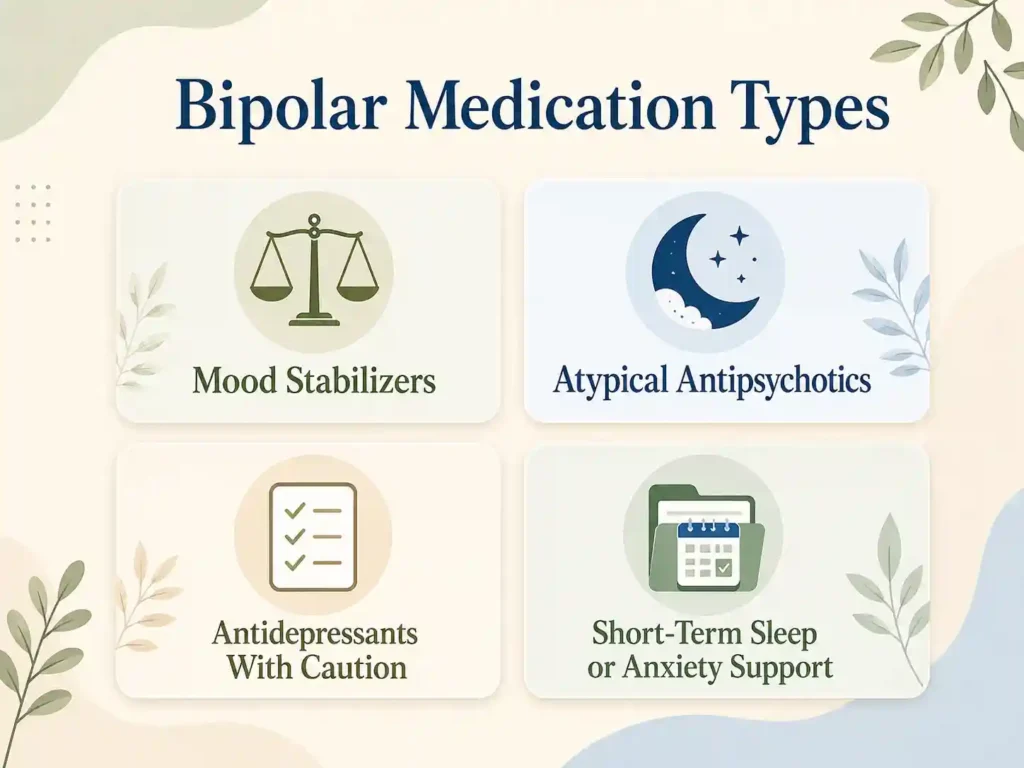
Mood Stabilizers
Mood stabilizers are often used to help reduce mood swings, prevent manic or depressive episodes, or support longer-term stability. Examples a prescriber may discuss include lithium, valproate or divalproex, carbamazepine, and lamotrigine.
These medications are not interchangeable. Each has different uses, risks, interactions, monitoring needs, and side effect profiles. Some require blood tests or other medical monitoring. Some may not be appropriate during pregnancy or when pregnancy is possible. A prescriber should explain why a specific option is being considered.
Atypical Antipsychotics
Atypical antipsychotics may be used for mania, mixed symptoms, agitation, psychosis, maintenance treatment, or bipolar depression depending on the specific medication and the person’s situation. Examples include quetiapine, lurasidone, olanzapine, risperidone, aripiprazole, ziprasidone, and cariprazine.
Families should know that this category can have very different effects from one medication to another. Some may be more sedating. Some may require monitoring for weight, cholesterol, blood sugar, movement symptoms, restlessness, or other side effects. The prescriber should explain what to monitor and when to follow up.
Antidepressants, With Caution
Antidepressants may sometimes be used for bipolar depression, but they require caution. In bipolar disorder, antidepressants are generally not used alone because they may increase the risk of mania, hypomania, or rapid cycling in some people. A prescriber may consider them only as part of a broader treatment plan, often with a mood-stabilizing medication.
Families should avoid encouraging someone to start an antidepressant, restart an old prescription, share medication, or stop a prescribed medication without professional guidance. What looks like depression may still need bipolar-specific treatment planning.
Short-Term Medication for Sleep, Anxiety, or Agitation
Sometimes a prescriber may use short-term medication to help with severe insomnia, anxiety, agitation, or acute symptoms. These medications are not the same as a full long-term bipolar treatment plan. Some can cause sedation, dependence, withdrawal concerns, or safety risks if misused.
Caregivers should ask what the medication is for, how long it is intended to be used, what side effects matter most, and when to call the prescriber.
Medication Types, Uses, and Family Questions
This table is not a medication recommendation. It is a conversation guide. Use it to prepare questions for the prescriber, not to choose a medication at home.
How to Use This Medication Table
Focus on the medication’s purpose, what your family can safely observe, and what questions should be brought back to the prescriber. Do not use this table to compare medications or decide what someone should take.
Mood Stabilizers and Antipsychotics
| Medication Type | Examples a Prescriber May Discuss | Possible Purpose | What Families Can Track | Questions to Ask the Prescriber |
|---|---|---|---|---|
| Mood stabilizers | Lithium, valproate or divalproex, carbamazepine, lamotrigine | May help reduce manic, depressive, or recurring mood episodes depending on the medication. | Sleep, mood shifts, tremor, nausea, energy changes, missed doses, lab appointments, hydration concerns. | What is this medication meant to help with? What monitoring is needed? What side effects should prompt a call? |
| Lithium | Lithium | Often used for mania prevention and long-term mood stabilization when appropriate. | Blood test schedule, thirst, urination changes, tremor, stomach upset, confusion, dehydration, medication interactions. | How often are blood levels checked? What should we do during illness, dehydration, or medication changes? |
| Anticonvulsant mood stabilizers | Valproate, divalproex, carbamazepine, lamotrigine | May be used for mania, mixed features, maintenance, or bipolar depression depending on the medication. | Rash, sedation, appetite or weight changes, stomach symptoms, menstrual or pregnancy-related questions, mood changes. | Is this safe with pregnancy possibility? Are there liver, blood, rash, or interaction risks we should understand? |
| Atypical antipsychotics | Quetiapine, lurasidone, olanzapine, risperidone, aripiprazole, ziprasidone, cariprazine | May help mania, mixed symptoms, psychosis, agitation, maintenance, or bipolar depression depending on the medication. | Sleepiness, restlessness, stiffness, appetite, weight, blood sugar, cholesterol, movement changes, mood response. | What metabolic or movement side effects should we monitor? When should follow-up happen? |
Antidepressants and Short-Term Support
| Medication Type | Examples a Prescriber May Discuss | Possible Purpose | What Families Can Track | Questions to Ask the Prescriber |
|---|---|---|---|---|
| Antidepressants | SSRIs or other antidepressants when carefully prescribed | May sometimes be added for bipolar depression as part of a broader plan. | Sleep reduction, increased energy, agitation, impulsivity, irritability, rapid mood changes. | Why is this being added? What signs of mania or hypomania should we watch for? |
| Short-term sleep or anxiety medication | Varies by situation | May be used temporarily for insomnia, anxiety, or agitation. | Sedation, confusion, falls, misuse risk, alcohol or substance use, next-day impairment. | How long is this intended? Is it safe with other medications, alcohol, driving, or medical conditions? |
What Families Can Safely Track
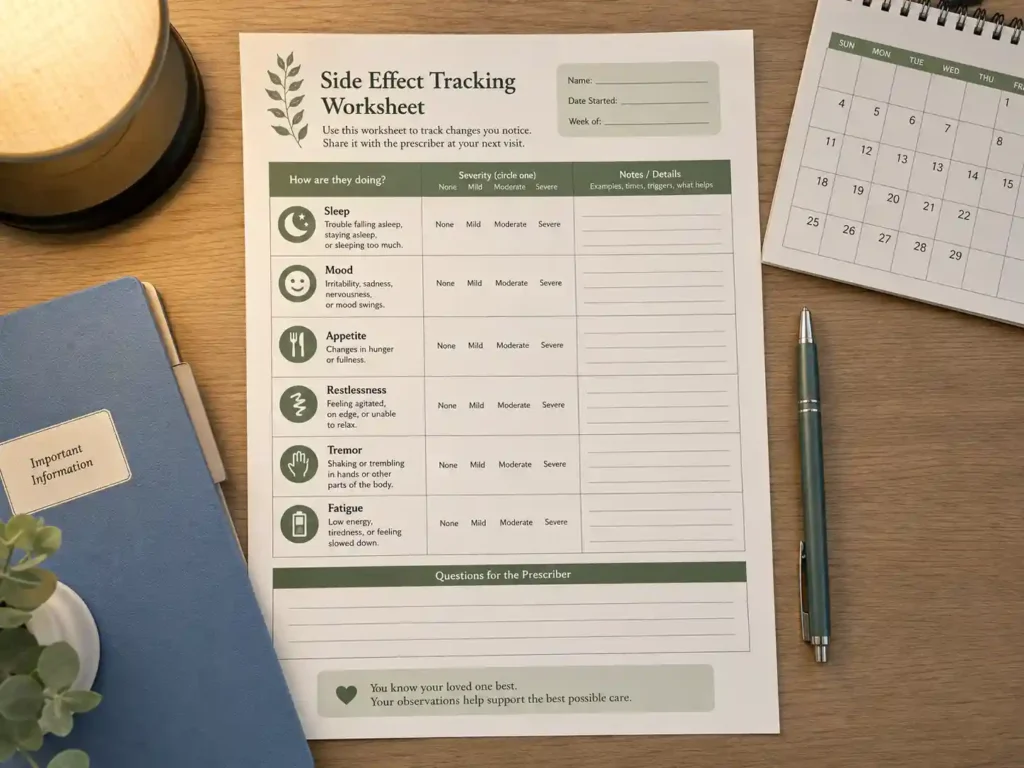
Families cannot judge whether a medication is “right” from the outside, but they can help notice patterns. Tracking should be factual, respectful, and shared only in appropriate ways. Avoid spying, shaming, or turning medication into a family argument.
Helpful details to track may include:
- sleep time and wake time;
- major mood changes;
- energy level and agitation;
- missed appointments or missed doses if the person chooses to share that information;
- new or worsening side effects;
- substance use concerns if relevant;
- suicidal language, psychosis, threats, or unsafe behavior;
- questions the person wants to ask at the next appointment.
A simple note is usually more useful than a judgment. Instead of writing “the medication is not working,” write: “Slept two hours, paced until 3 a.m., felt restless, and said the medication made them feel uncomfortable.”
If the behavior may involve alcohol or drug use as well as mood symptoms, read bipolar disorder or drug use: what families can track.
Side Effects and Medication Concerns
Side effects are one of the main reasons people become discouraged with treatment. A loved one may stop medication because of fatigue, weight changes, tremor, restlessness, sexual side effects, emotional dullness, nausea, brain fog, sleepiness, fear of lab tests, or worries about identity and creativity.
Families should take these concerns seriously. Dismissing side effects can make a person feel unheard and less likely to talk openly with the prescriber.
| Concern | What It May Sound Like | Supportive Caregiver Response | What Not to Do |
|---|---|---|---|
| Fatigue or sedation | “I feel like a zombie.” | “That sounds really hard. Can we write that down for your prescriber?” | Do not tell them to stop or skip doses. |
| Weight or appetite changes | “This medication is changing my body.” | “That matters. Let’s ask what options or monitoring are available.” | Do not shame, tease, or minimize the concern. |
| Tremor or physical symptoms | “My hands are shaking.” | “Let’s note when it started and ask whether it needs medical attention.” | Do not assume it is harmless. |
| Restlessness or agitation | “I cannot sit still.” | “That sounds uncomfortable. Let’s contact the prescriber for guidance.” | Do not blame them for being difficult. |
| Emotional dullness | “I do not feel like myself.” | “I hear you. That is worth discussing with your clinician.” | Do not argue that stability means they should accept everything. |
| Fear of medication | “I do not want to be controlled.” | “You deserve to understand the risks, benefits, and choices.” | Do not force, hide, or threaten medication use. |
Call the prescriber or seek urgent help sooner if side effects seem severe, sudden, frightening, or connected to confusion, severe rash, fainting, suicidal thoughts, dangerous behavior, allergic reaction, severe restlessness, or signs the person may harm themselves or someone else.
Medication Safety: What Caregivers Should Avoid
Medication stress can push families into control. That is understandable, but medication control can be unsafe and can damage trust.
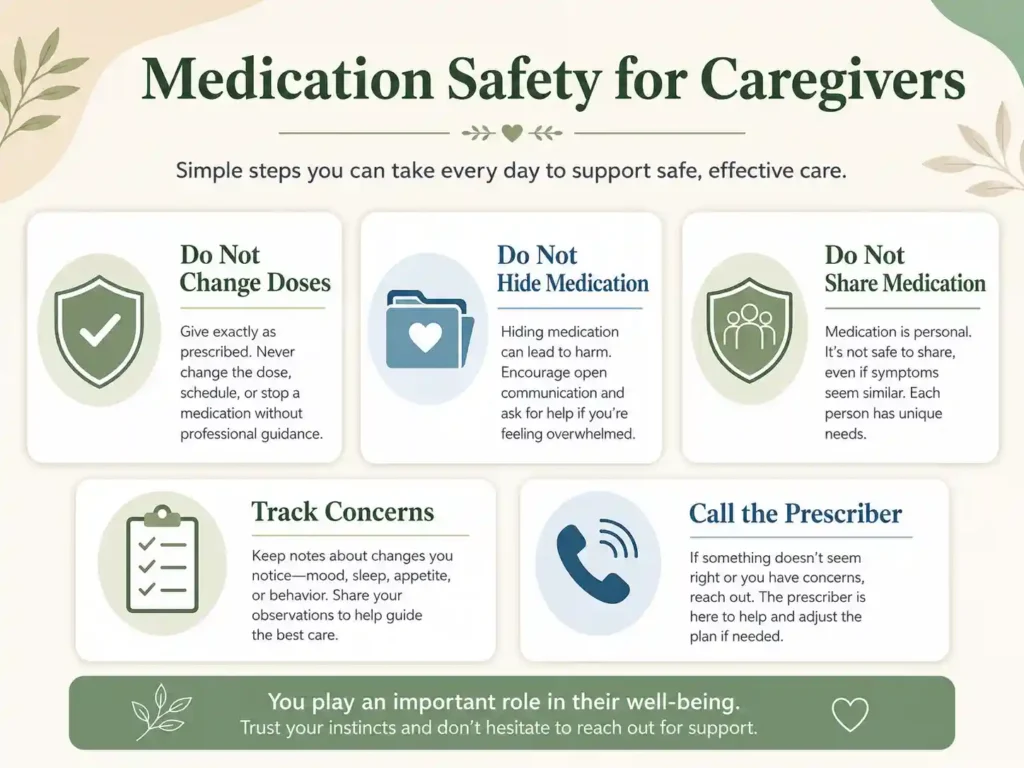
- Do not tell someone to start, stop, increase, reduce, or change medication.
- Do not hide medication in food or drinks.
- Do not share another person’s medication.
- Do not restart an old prescription without a prescriber.
- Do not mix medication with alcohol or substances without medical guidance.
- Do not ignore pregnancy-related medication questions.
- Do not use medication as a threat during conflict.
- Do not assume “natural” supplements are automatically safe.
A safer caregiver role is to help organize questions, encourage appointments, support transportation if welcomed, track factual concerns, and protect safety when risk is present.
If your loved one refuses medication or treatment, read what to do when someone with bipolar refuses help.
Questions to Prepare for the Prescriber
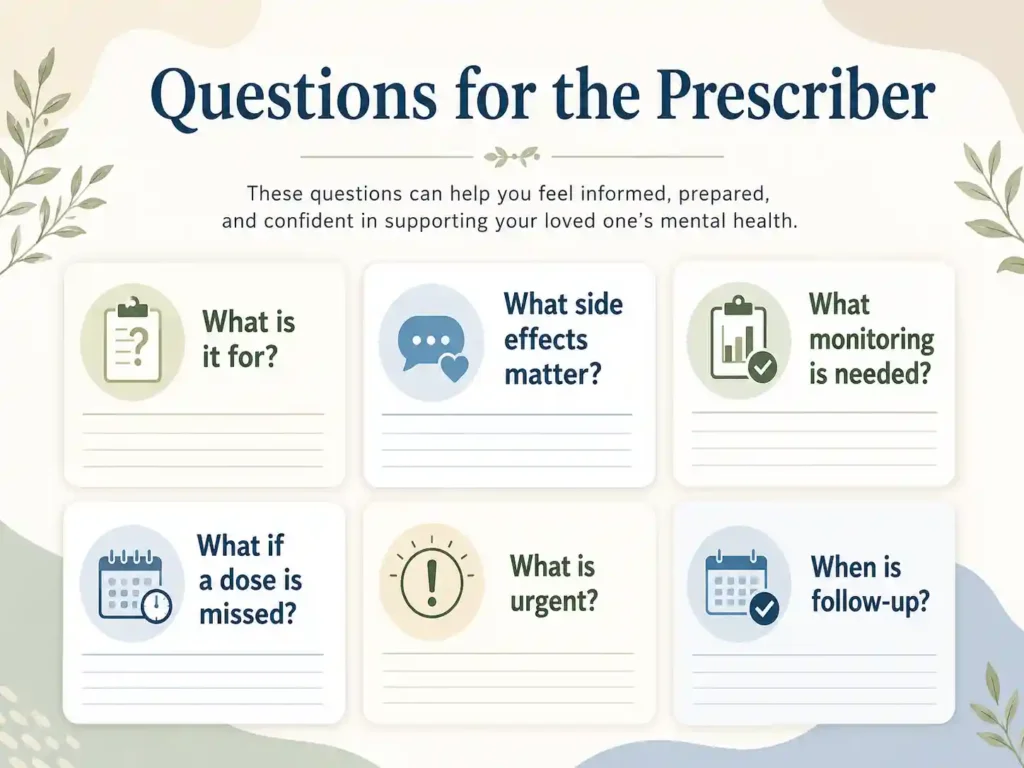
Appointments can feel rushed. Writing questions ahead of time can help the person and family stay focused. The person receiving care should lead the conversation whenever possible.
- What symptom or episode is this medication meant to help with?
- Is this for mania, depression, mixed symptoms, sleep, psychosis, maintenance, or short-term support?
- What side effects are common?
- Which side effects are urgent?
- Does this medication require blood tests or physical health monitoring?
- Are there food, alcohol, supplement, or drug interaction concerns?
- What should happen if a dose is missed?
- What should we do during illness, dehydration, vomiting, or major sleep loss?
- Is this medication safe if pregnancy is possible, planned, or discovered?
- How soon should follow-up happen?
- What signs might mean mania, hypomania, or rapid cycling is emerging?
- Who should we call after hours if side effects become concerning?
These questions do not replace medical judgment. They help families support shared decision-making instead of guessing at home.
Medication for Mania, Bipolar Depression, and Maintenance
Medication choices often depend on the phase of illness. A plan for acute mania may look different from a plan for bipolar depression or maintenance treatment.
During mania or severe agitation
When someone is manic, sleeping very little, acting impulsively, becoming aggressive, experiencing psychosis, or making unsafe decisions, treatment may need to focus on reducing immediate risk and stabilizing symptoms. A prescriber may consider mood stabilizers, antipsychotics, or combination treatment depending on the situation.
Families should not try to persuade someone through a long debate during severe escalation. If safety is at risk, use the crisis plan or contact urgent support.
For preparation, see how to create a bipolar emergency plan and how to help someone during a manic episode.
During bipolar depression
Bipolar depression can look like low energy, hopelessness, withdrawal, sleep changes, irritability, loss of interest, shame, or thoughts of death. It can be tempting to assume the answer is a standard antidepressant, but bipolar depression needs bipolar-specific care. Antidepressants may not be used alone because of mania or rapid cycling risk.
If suicidal thoughts, self-harm language, or immediate danger appears, seek crisis support. In the United States, call or text 988.
For maintenance and relapse prevention
Some medication is prescribed not because a crisis is happening today, but to reduce the chance of future episodes. This can be hard for families and loved ones to understand, especially when the person feels better.
A calmer way to discuss this is:
“I know it is frustrating to take medication when things feel better. Can we ask your prescriber what the plan is for staying well and what options exist if side effects are bothering you?”
Children, Teens, and Bipolar Medication
Medication decisions for children and teens require specialized care. Symptoms can overlap with ADHD, trauma, autism, anxiety, depression, substance use, sleep problems, or family stress. Diagnosis and dosing are more complex because children and teens are still developing.
Parents and guardians may help by tracking sleep, school changes, appetite, side effects, mood shifts, irritability, risky behavior, and any suicidal language. But medication decisions should be handled by qualified clinicians experienced with child and adolescent mental health.
Families should ask:
- What diagnosis is being treated?
- Why this medication and not another option?
- What side effects should parents monitor?
- What school changes should we watch for?
- How often should follow-up happen?
- What should we do if symptoms worsen?
If children are affected by a parent’s symptoms, read supporting children of bipolar parents.
Helpful Supports Beyond Medication
Medication is often important, but it is usually not the whole support system. Many people with bipolar disorder also benefit from therapy, psychoeducation, routine, sleep support, relapse planning, and family communication skills.
Helpful supports may include:
- psychotherapy, such as CBT, family-focused therapy, or interpersonal and social rhythm therapy;
- learning early warning signs;
- consistent sleep and wake routines;
- reducing alcohol or substance use when relevant;
- family communication plans;
- support groups or peer education;
- a written crisis plan;
- regular follow-up with clinicians.
Complementary supports should not be presented as replacements for medication or clinical care. Supplements, bright light therapy, herbal products, and “natural” approaches can carry risks or interact with treatment. Always ask the prescriber before adding them.
Calm Scripts for Medication Conversations
Medication conversations can become tense quickly. Try to keep the focus on safety, symptoms, side effects, and support rather than control.
- “I am not trying to control your treatment. I am worried and want you to have support.”
- “I hear that the side effects feel hard. Can we write them down for your prescriber?”
- “I do not want to argue about medication. I want us to talk about sleep, safety, and the next appointment.”
- “I cannot tell you what to take, but I can help you prepare questions.”
- “If you feel worse after a medication change, I want us to call the prescriber instead of handling it alone.”
- “I respect that this is your body and your treatment. I also need to be honest when things feel unsafe at home.”
For more communication help, read how to communicate with someone who has bipolar disorder.
When Medication Concerns Become Urgent
Some situations should not wait for a routine appointment. Seek urgent professional help if you notice:
- suicidal thoughts, self-harm language, or statements about wanting to die;
- threats toward others;
- psychosis, severe paranoia, or severe confusion;
- dangerous agitation, violence, or unsafe driving;
- suspected overdose;
- severe allergic reaction or severe rash;
- fainting, severe weakness, or sudden serious physical symptoms;
- medication mixed with alcohol, drugs, or unknown substances;
- no sleep for days with escalating impulsivity or agitation.
If there is immediate danger, contact emergency services. In the United States, call or text 988 for mental health crisis support.
Related Guides for Families
- Untreated Bipolar Disorder: Risks, Warning Signs, and Safe Next Steps
- What to Do When Someone With Bipolar Refuses Help
- How to Create a Bipolar Emergency Plan
- Bipolar Disorder or Drug Use? What Families Can Track
- How to Support Someone With Bipolar Without Enabling
- How to Communicate With Someone Who Has Bipolar Disorder
- Setting Boundaries With Someone Who Has Bipolar Disorder
- Bipolar Caregiver Burnout: Signs, Checklist, and Recovery Plan
Trusted Resources
These resources can help families learn more, prepare questions, and find support. They do not replace individualized medical care.
- National Institute of Mental Health: Bipolar Disorder
- National Institute of Mental Health: Mental Health Medications
- NAMI: Bipolar Disorder
- NAMI: Types of Medication
- MedlinePlus: Lithium
- MedlinePlus: Lamotrigine
- 988 Suicide & Crisis Lifeline
Frequently Asked Questions About Bipolar Disorder Medication
What are the main types of bipolar disorder medication?
Common medication categories include mood stabilizers, certain anticonvulsants, atypical antipsychotics, and sometimes carefully monitored antidepressants or short-term medications for sleep, anxiety, or agitation. The right plan depends on diagnosis, symptoms, medical history, side effects, safety risks, and the prescriber’s judgment.
Can bipolar disorder be treated without medication?
Some supports such as therapy, routines, sleep stability, and psychoeducation can help, but they do not replace medical care when medication is clinically needed. Bipolar disorder can involve serious mood episodes and safety risks, so treatment decisions should be made with qualified professionals.
Are antidepressants safe for bipolar disorder?
Antidepressants may sometimes be used, but they require caution. They are generally not used alone in bipolar disorder because they may trigger mania, hypomania, or rapid cycling in some people. A prescriber should explain why an antidepressant is being considered and what warning signs to watch for.
What should families track after a medication change?
Families can track sleep, mood, energy, agitation, side effects, appetite, restlessness, missed appointments, substance use concerns, and safety risks. Use dates and specific observations instead of labels or accusations.
What if my loved one wants to stop medication?
Try not to argue or threaten. Ask what feels hard, write down side effects or concerns, and encourage them to contact the prescriber before making changes. Stopping suddenly can be risky for some medications and situations.
Can caregivers call the prescriber?
Caregivers can usually share concerns with a clinician, but the clinician may not be able to share information back without consent because of privacy rules. Ask your loved one whether they are willing to sign a release or include you in part of an appointment.
What side effects should be reported quickly?
Report severe, sudden, frightening, or worsening symptoms quickly, especially severe rash, suicidal thoughts, confusion, fainting, severe restlessness, allergic reaction, dangerous agitation, or symptoms that affect safety. Emergency symptoms require urgent care.
Is lithium still used for bipolar disorder?
Yes. Lithium is still used for some people with bipolar disorder, especially for mania prevention and long-term mood stabilization when appropriate. It requires medical monitoring, and the prescriber should explain blood tests, hydration concerns, interactions, and side effects.
Are bipolar medications safe during pregnancy?
Pregnancy and pregnancy planning require careful medical guidance. Some medications used in bipolar disorder can carry serious pregnancy-related risks. Anyone who is pregnant, planning pregnancy, or could become pregnant should discuss medication safety with qualified clinicians before making changes.
What is the safest first step for families?
The safest first step is to avoid changing medication at home. Write down clear concerns, ask the person what they want help communicating, prepare questions, and encourage a prescriber appointment. If there is immediate danger, seek crisis or emergency support.
Final Takeaway
Bipolar disorder medication can be confusing for families because the names, categories, side effects, and treatment goals are not always easy to understand. But families do not need to choose the medication to be helpful.
Your role is to support safety, listen to concerns, track facts, prepare questions, encourage qualified care, and avoid turning medication into a control battle.
You can say, “I cannot decide this for you, but I care about you, and I want you to have support that feels safe and informed.”
Free Download
Bipolar Medication Tracker & Side Effect Log
Use a simple tracker to organize medication schedules, side effects, sleep changes, mood notes, and questions for appointments. This tool is for organization only. It is not a medical decision tool and does not replace professional care.
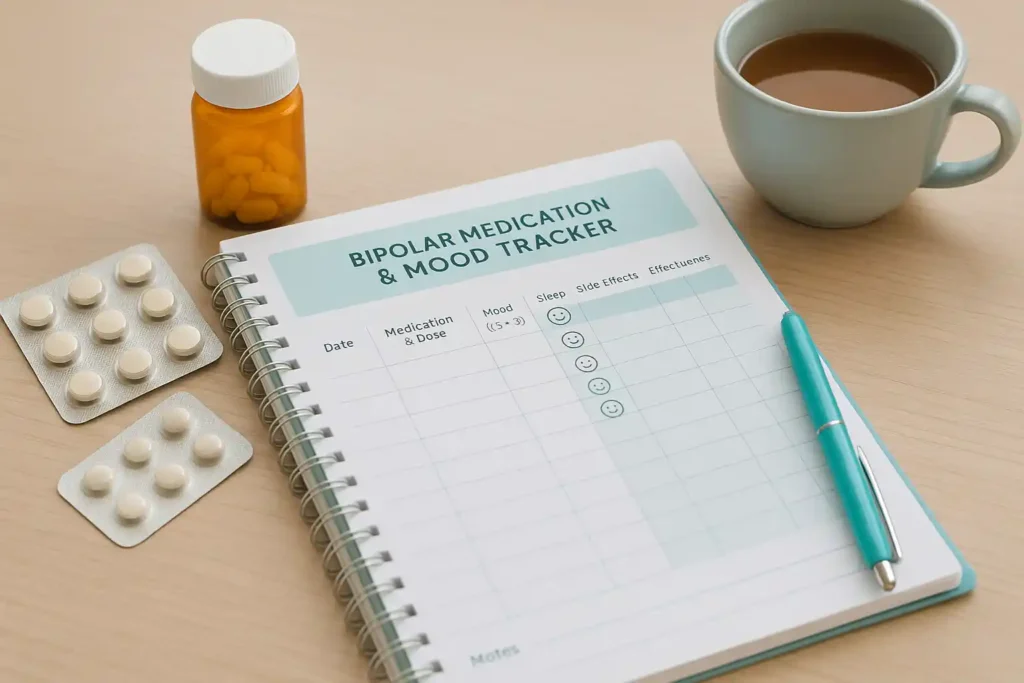
Download the Bipolar Medication Tracker